Human beings have always wanted to communicate their identities, emotions, beliefs, and inner truth in meaningful ways; hence, symbols to represent themselves.
Symbols can have a story to tell without words. Symbols have strong emotional meaning, whether it be from ancient warriors engraving them on shields, or modern individuals opting for tattoos, jewelry, or personal symbols.
Embedded in these enduring symbols are meanings of courage, love, transformation, fear, wisdom, hope, survival and the soul.
Symbols are a natural link to many people at those emotional moments of life. When a wedding ring is broken, a new job comes up, you move to another city, you lose someone in your life or you begin a new chapter, suddenly a symbol can feel very personal.
A person suffering from emotional pain can become emotionally attached to the phoenix because it symbolizes rebirth after destruction.
It may be that another person reaches out to the compass because they lack direction and are feeling uncertain.
It is this emotional bond that has made symbols so enduring and across cultures, generations, religions, and contemporary society. Symbols communicate directly to the human mind and the human heart.
What are symbols to represent yourself?
Symbols to represent yourself are visual representations, shapes, objects, animals, spiritual marks that express one’s personality, emotions, values, life experiences, beliefs and identity.
These symbols are like a reflection of the inner self. They assist in expressing feelings and personal beliefs without lengthy explanations.
Symbols have been a means of keeping track of people for ages. Pharaohs of Egypt used to wear sacred symbols as pointers to their divine power. Symbols were painted on the body to indicate community, courage and protection.
Family crests were worn by medieval knights as a sign of a man’s honor and loyalty. Tattoo symbols are in use today in tattoos, social media profiles, clothing, jewelry, fashion, branding, artwork and spirituality.
The human brain’ s emotional response to pictures is quicker than to words, making symbols powerful. Lions are a symbol of courage and power. A butterfly brings the idea of change and the freedom to others.
A tree symbolizes growth and stability. These emotional meanings are embedded in memory, culture and psychology.
Personal symbols may be used to represent:
- Identity
- Strength
- Healing
- Hope
- Freedom
- Spiritual awakening
- Love
- Creativity
- Rebirth
- Confidence
- Surival
- Direction
- Wisdom
- Emotional growth
- Protection
- Transformation
Symbols are the beauty of converting emotions to visuals.
Symbols to represent yourself and identity meanings
Spiritual symbols to represent yourself
Spiritual symbols are frequently associated with peace, faith, emotional healing, wisdom, and inner connection.
Many people will select spiritual symbols when they are experiencing emotional issues as the symbols provide a sense of direction and emotional support.
Some popular spiritual symbols are:
- Lotus flower
- Yin Yang
- Hamsa hand
- Tree of life
- Om symbol
- Crescent moon
- Sacred geometry
- Cross
- Mandala
The lotus flower is particularly potent as it is so graciously produced above dirty water. It is a spiritual symbol of growth through hardship or overcoming hardship.
Balance between opposing forces, light/dark, calm/struggle, happy/sad, etc. is symbolized by the yin yang. This symbol is worn by many to remind themselves that life has its good and bad times.
Someone in emotional turmoil might have a small spiritual symbol with them for times of stress, as it gives a feeling of grounding and stability.
Symbols To Represent Yourself Tattoos
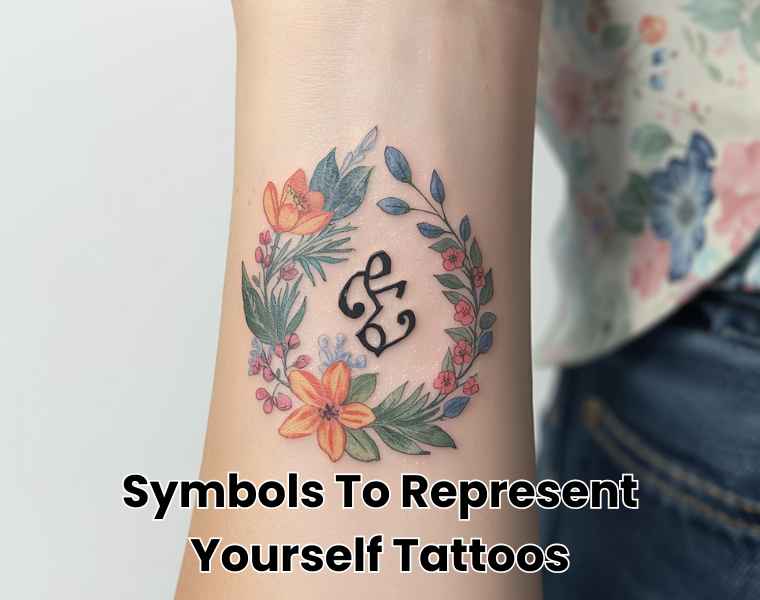
Tattoos are among the most individual means of symbolizing identity. A lot of the symbolic tattoos depict emotional recollections, life difficulties, spiritual beliefs, or change.
Symbolic tattoos are sometimes done following a significant event in life. A person who experienced heartbreak may opt for tatted phoenix as it’s an emblem of survival and rebirth.
For those who appreciate free-spirited things, they might select birds or feathers. The tree of life may be selected because of knowing and loving the family.
Common symbols for tattoos are:
- Phoenix
- Butterfly
- Anchor
- Compass
- Arrow
- Wolf
- Lion
- Feather
- Moon
- Infinity sign
Even a small wrist or finger tattoo can have a significant emotional resonance for the person who has it, as only they can truly grasp.
Tattoos are often a way for people to remember who they are, how they feel and how they survived.
Ancient Symbols To Represent Yourself
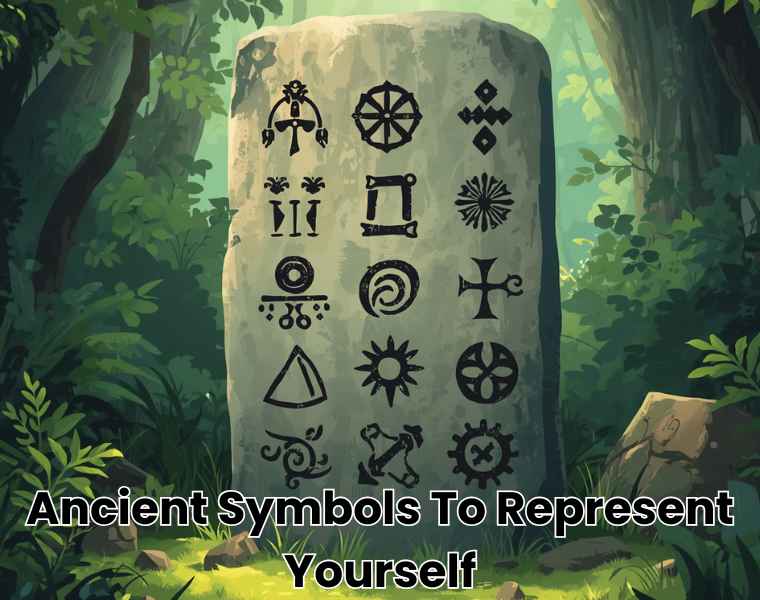
Ancient symbols continue to appeal to people, as they link modern identity to the timeless wisdom.
These symbols have lasted throughout the centuries because human emotions and struggles are similar throughout the ages.
Egyptian Symbols
Opposite of death and death’s end.Life and death’s end.
The scarab is a symbol of rebirth and transformation.
The Eye of Horus is a symbol of protection and wisdom.
Celtic Symbols
Celtic knot is a symbol of eternity and life cycles
Triskelion symbolises spiritual development and progress
Norse Symbols
Valknut is a symbol of courage, destiny
Helm of Awe is a symbol of protection and strength.
Greek Symbols
A laurel wreath is a symbol of victory and achievement.
Owl of Athena is a symbol of wisdom and intelligence
Individuals tend to be emotionally bound up with ancient signs because they feel connected with the tales that have actually survived through generations.
Symbols That Represent Personality
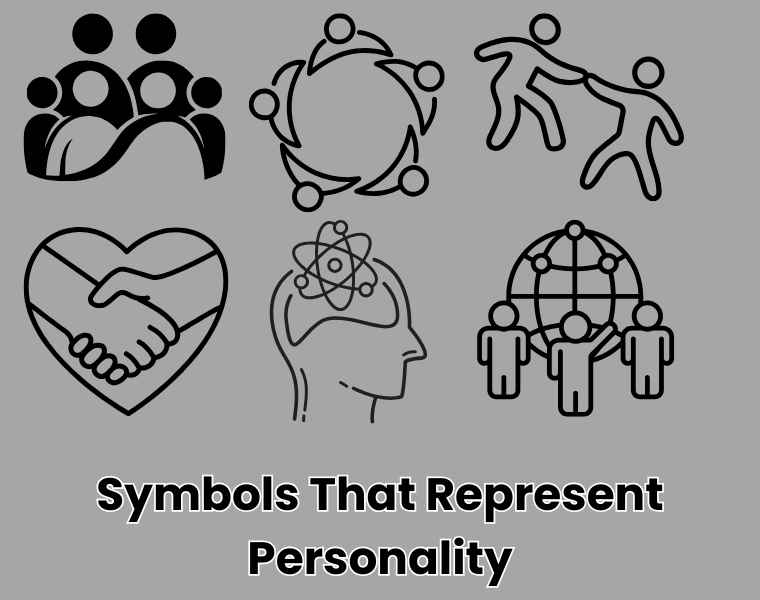
Of course, each symbol has different personality traits and emotional energies that are appropriate for them.
| Symbol | Meaning |
| Wife | Strength, perseverance, determination, firmness, stamina, perseverance, strength of character |
| Wolf | Faithfulness, devotion, self-reliance |
| Owl | Wisdom, deep thinking |
| Butterfly | Transformation, creativity |
| Fox | Intelligence, adaptability |
| Deer | Gentleness, peace |
| Eagle | Vision, ambition |
| Horse | Freedom, energy |
| Bear | Strength, resilience |
| Dolphin | Joy, emotional connection |
Moon symbols can evoke emotions in a calm and thoughtful person, or fire or eagle symbols can inspire a highly ambitious person.
Symbols enable people to convey personality qualities that cannot be expressed in words.
Life Symbols And Their Meanings
Life symbols are for growth, hope, emotional development and the human journey.
Tree Of Life
The tree of life represents growth, family, connection and resilience. Its roots are a symbol of stability, and its branches are a symbol of expansion and possibilities for the future.
Infinity Symbol
The infinity symbol evokes endless possibilities, continuity, an unending love and life’s ongoing journey.
Sun Symbol
Sun represents energy, confidence, warmth, success and new beginnings. The sun symbol is a means of contact for people at times of personal development.
River Symbol
A river represents emotional flow, movement, healing and change. Life is always flowing – like water.
Circle Symbol
The circle is a symbol of unity, completion, eternity and wholeness.
A person at the end of an important chapter in their life could be emotionally drawn to the sunset image as it is a symbol of both endings and new beginnings.
10 Items That Can Describe Yourself
Objects can also act as personal symbols that reflect identity and emotional meaning.
- Book is a symbol of learning and wisdom
- Camera is a symbol of memories and creativity
- Compass is a symbol of purpose and direction
- Candle is a symbol of hope during darkness
- Mirror is a symbol of self reflection
- Pen is a symbol of expression and ideas
- Watch is a symbol of awareness of time
- Flower is a symbol of emotional softness
- Key is a symbol of opportunity and freedom
- Tree is a symbol of strength and personal growth
A writer may feel emotionally attached to a pen because writing becomes part of their identity.
A traveler may emotionally connect with maps or compasses because life feels like a continuous journey.
Common Symbols In Everyday Life
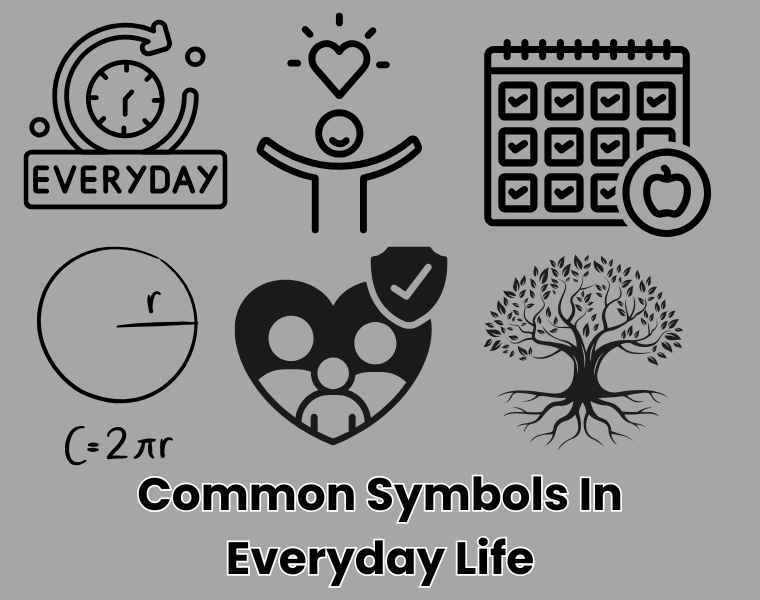
Symbols are omnipresent in the modern life and play an unnoticed role in shaping the communication.
Examples include:
Hearts symbolises Love and affection.
What are your dreams and inspirations?What are the stars?
• Emojis are a symbol of emotional communication
Traffic signs are a symbol of SAFETY & GUIDANCE
What is the point of having brand logos if they are not supposed to give an identity and recognition?
Warning signs are a symbol of danger and caution
The red heart emoji can express love in an instant without resorting to words.
Symbols shorten the communication process, create emotional impact and are memorable.
Symbols To Describe Yourself
Many people use symbols because emotions often feel too deep or complicated for language.
Examples include:
- Phoenix symbolises overcoming hardship
- Feather symbolises emotional freedom
- Broken chain symbolises liberation from pain
- Road symbolises life journey
- Mountain symbolises endurance and patience
- Water symbolises healing and emotional depth
- Moon symbolises mystery and intuition
Someone recovering from emotional stress may strongly connect with water symbolism because flowing water emotionally feels calm, healing, and restorative.
Symbols To Describe Yourself
These are the symbols to use to describe yourself.
People like to use symbols, because they feel the emotions are too deep or complex to communicate with words.
Examples include:
- Phoenix symbolises overcoming hardship
- Feather symbolises emotional freedom
When a person’s chain is broken, they are free from pain.
- Road symbolises life journey
- Mountain symbolises endurance and patience
- A water symbolises healing and emotional depth.
- Water symbolises healing and emotional depth.
Mistery and intuition are the same in the case of Moon. Flowing water is emotionally calming, healing and restorative and may be very meaningful for a person on the road of recovery from emotional stress.
Personal Symbolism And Identity
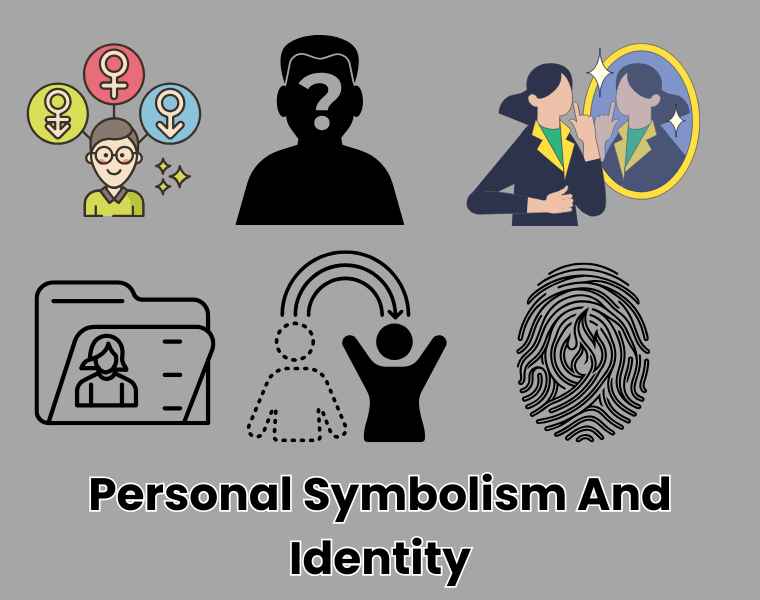
What Is Personal Symbolism?
Emotional significance that individual’s give to objects, signs, animals or images in life. Occasionally these meanings are drawn from personal recollections. A ring can be a symbol of family.
A photograph can be a symbol of healing in the aftermath of loss. A road sign can be a reminder of some big event in one’s life.
These symbols over time come to be linked with the idea of identity itself.
What’s a Symbol of Identity?
A symbol of identity is a visual symbol that represents:
- Personality
- Culture
- Beliefs
- Experiences
- Emotional values
- Life journey
Identity symbols help individuals to feel attached to their story and themselves.
Popular identity symbols are:
- Fingerprint symbolises uniqueness
- Phoenix symbolises rebirth
- Tree of life symbolises growth
- Infinity sign symbolises continuity
- Anchor symbolises stability
- Compass symbolises direction
Individuals look for symbols as it helps them to make sense of identity through emotional images.
Deep Symbolic Meaning
Spiritual Meaning
Symbols are a way for a person to reach beyond himself or herself in spirit. Symbols are charged with emotional and spiritual energy in many spiritual traditions.
The lotus flower emerging from dirty water represents the ability to attain nirvana in the midst of tribulations. The phoenix is a symbol for spiritual resurrection. The star is often used to represent hope and guidance from God.
Symbols are often selected when there are emotional milestones in life, since at times of uncertainty in life a symbol provides emotional comfort.
Someone who is emotionally lost can grip a spiritual symbol for the feelings of peace, safety and emotional grounding it provides.
Psychological Meaning
Psychologists believe symbols reveal hidden parts of the human mind. Carl Jung explained that symbols emerge from the subconscious and connect human beings through universal archetypes.
People often emotionally attach themselves to symbols because the brain processes visual imagery more emotionally than words.
For example:
- Broken chains instantly create feelings of freedom
- Dark storms may represent emotional chaos
- Light often symbolizes truth and hope
- Keys may symbolize hidden opportunity
A person emotionally drawn to wolves may value independence and loyalty. Someone obsessed with clocks may subconsciously fear time or change.
Symbols help people understand emotions they struggle to explain directly.Psychologists think that the symbols uncover the concealed facets of the human psyche.
Carl Jung described symbols as coming out of the subconscious mind, and bridging connections between human beings via universal archetypes.
Symbols tend to evoke emotions of the brain more than words, leading to the phenomenon of people getting attached to symbols.
For example:
- When it comes to chains, busted ones immediately evoke feelings of freedom.
- Dark storms can also be a sign of emotional turmoil.
- Light is often a representation of truth and hope
- The keys can represent an untapped opportunity.
An individual that has a affinity for wolves might appreciate freedom and fidelity. If the person has an obsession with the clock, he or she may unconsciously be afraid of time or change.
Symbols assist people to understand feelings that they may have difficulty communicating directly.
Cultural Meaning
Symbols can have different meanings from culture to culture.
Dragon
Wisdom, luck, prosperity symbolises Chinese culture
Away from the east symbolises safe and secure.
Snake
In ancient medicine, healing and rebirth were the two things that were associated with it.
The Temptation and fear are the subject of religious stories.
Crow
Some traditions symbolises wisdom and intelligence
Others symbolises bad omens and death
The cultural symbolization is preserving the history, tradition and collective emotional identity.
Types And Variations Of Symbols To Represent Yourself
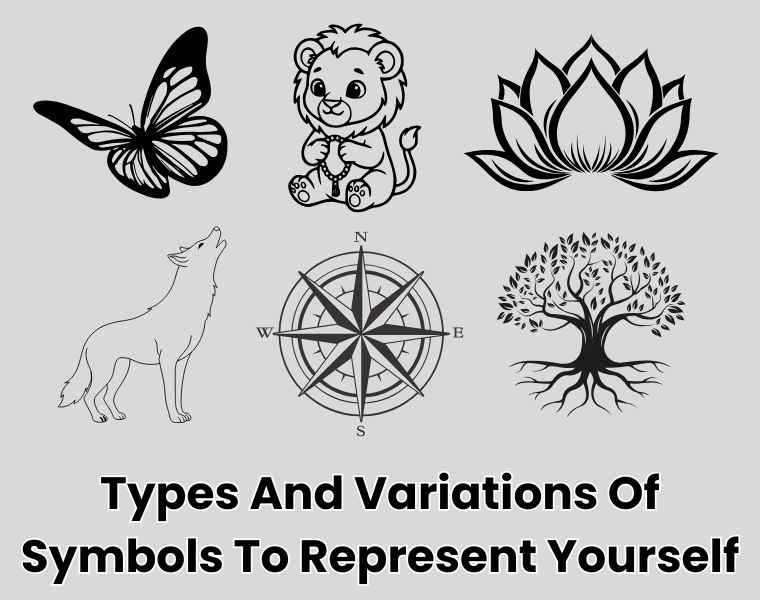
- Phoenix
- Meaning
- Rebirth, Strength, Change, Survival
The phoenix is one of the most emotionally charged symbols, meaning that it is a symbol of rebirth. They are deeply connected to this symbol for those who have suffered emotional pain, failure or trauma.
1. Butterfly
Change, liberation, beauty, development of feeling.
The butterfly is a symbol of personal development. It is a reminder to people that the suffering stages of life can one day become beautiful.
2. Lion
Leadership, courage, strength, confidence.
One reason many people opt for lion images is that it is reminiscent of the inner strength and determination in a lion that is not afraid of anything.
3. Lotus Flower
Educability, spiritual awakening, purity, enlightenment.
The lesson of the lotus: Goodness and beauty can be found in challenging situations.
4. Wolf
Instinct, loyalty, independence, EI.
The wolf evokes feelings of freedom and loyalty to family and friends.
5. Compass
Direction, purpose, guidance.
Many times the compass is used in times of life crisis as a way of finding the right way.
6.Tree Of Life
Relationality, harmony, family, strength.
This symbol is a reminder that growth is built on strong foundations, and that it requires courage to grow beyond them.
Symbols Across Different Cultures
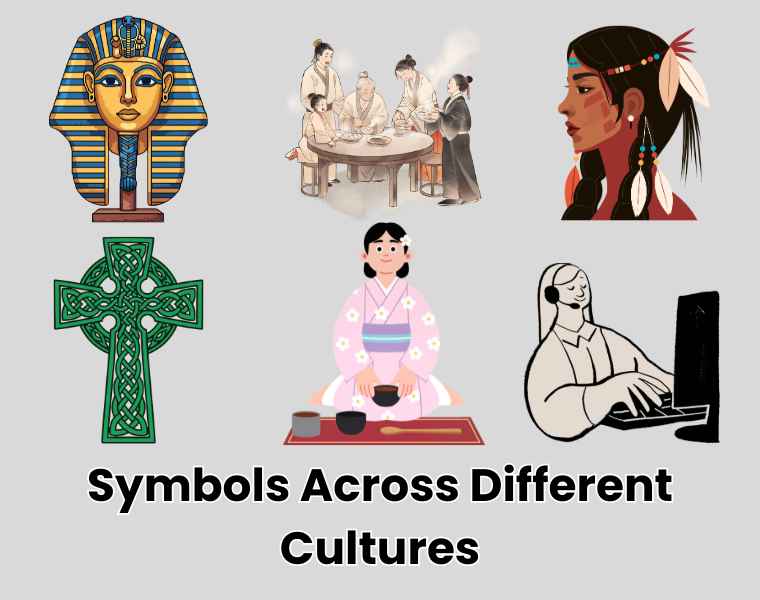
Ancient Egypt
Ancient Egyptians thought symbols linked man and God.
- Ankh symbolises eternal life
- Scarab symbolises rebirth
- Horus’s Eye symbolises protection
These symbols were found on sacred writings, jewellery, temples and tombs.
Chinese Culture
Balanced, prosperous, lucky and harmonious are among the common themes in Chinese symbolism.
The dragon’s characteristics are power and wisdom.
- Yin Yang symbolises balance
- Bamboo symbolises resilience
Every type of harmony and renewal. All forms of harmony and renewal.
There are many Chinese symbols that have a focus on emotional and spiritual balance.
Native American Traditions
Native traditions are highly symbolic of animals.
- Antelope symbolises strength and agility
The bear symbolizes protection and strength.The bear is a symbol of protection and strength.
The grey wolf is the symbol for instinct, loyalty.
Patience and wisdom are the characteristics of a turtle.
These symbols link body, mind and spirit of the people to the natural world and to their ancestors.
Celtic Culture
Eternity is often represented in the Celtic symbols in an endless way.
The Celtic knot symbolizes the circle of life without an end.
Spiral is a spiritual evolution of wisdom and growth are represented by tree symbols.
The Celtic symbolism is still prevalent in contemporary tattoos and jewelry.
Japanese Culture
Japanese Symbolism is a blend of beauty and emotion.
Cherry blossom is a sign of beauty of life is fleeting
Koi fish is a sign of perseverance
The combination of the two favors peace and longevity.
Crane symbolises Peace and longevity.
Moon is a symbol of emotional reflection
Japanese symbols can often promote acceptance of change and emotional balance.
Miscellaneous Symbols
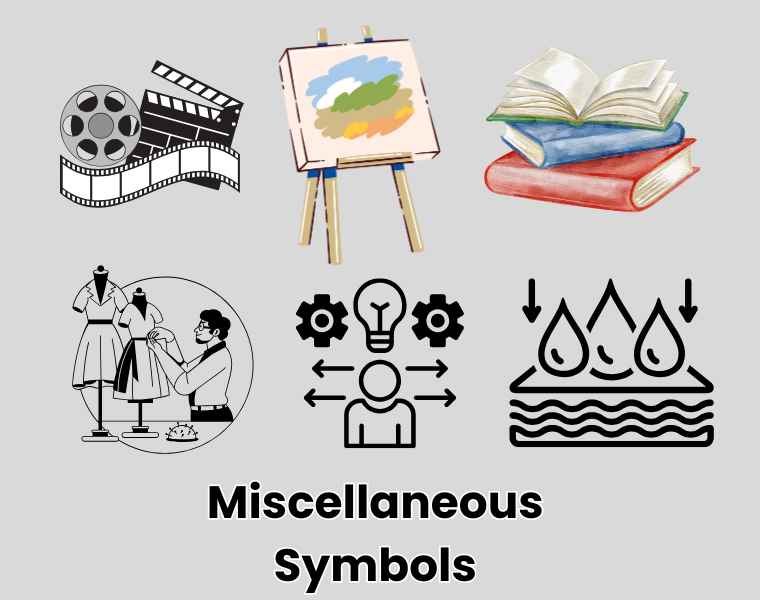
This is a collection of symbols that are used in art, movies, and popular culture.
Symbols are everywhere in modern stories as they convey meaning instantly.
Movies
Symbols form an integral part of films.
Masks are symbol of hidden identity
Darkness is a symbol of fear/uncertainty
Light is a symbol of hope and truth
Fire is the symbol of the destruction or the rebirth.
Logos are frequently used by superheroes to symbolize justice, courage, or fear.
Paintings
Through visual symbolism artists communicate emotions.
Storms is a symbol of emotional chaos
Beauty and mortality (flowers)
Mirror cracks is a symbol of identity conflicts
Oceans are symbol of emotions in the deep state
Art has an emotional impact on people because symbols evoke powerful subconscious responses.
Literature
Symbolic imagery is used repeatedly by writers.
Roads are symbols of life journeys
Birds are a symbolic form of freedom
Seasons are symbols of emotional change
Healing / water Uncertainty / water
Readers remember symbolic stories emotionally because the symbolic stories evoke powerful mental pictures of the reader.
Fashion
Often the symbolic imagery in fashion is used to convey identity.
Crowns are a symbolic form of confidence
Snakes are symbols of mystery and transformation
The moon is a symbol of intellect and the mind. The moon is also a symbol of intellect and mind.
Rings are a symbol of strength and courage
Symbols are worn because people wish to have the appearance reflect the personality.
Spiritual And Dream Meaning Of Symbols
The subconscious mind cannot process information in a linear, logical fashion—it communicates in symbols, which is why dreams are filled with symbolism.
Examples:
- Water symbolises emotional healing
- Transformation or anger is symbolized as Fire
- Flying birds are a symbol of freedom
- Keys symbolised opportunity
- Completeness and unity is symbolised as circles
- Wolves are symbols of rusting instincts
- Butterflies are symbols of personal transformation
Some people will see particular symbols on a number of occasions throughout their lives when they are feeling emotional.
The repeating symbols are a part of many spiritual traditions that see them as having emotional or spiritual guidance.
Symbols are often utilized in meditation practices due to the fact that visual images can help boost emotional focus and awareness.
Positive vs. Negative Symbolic meanings
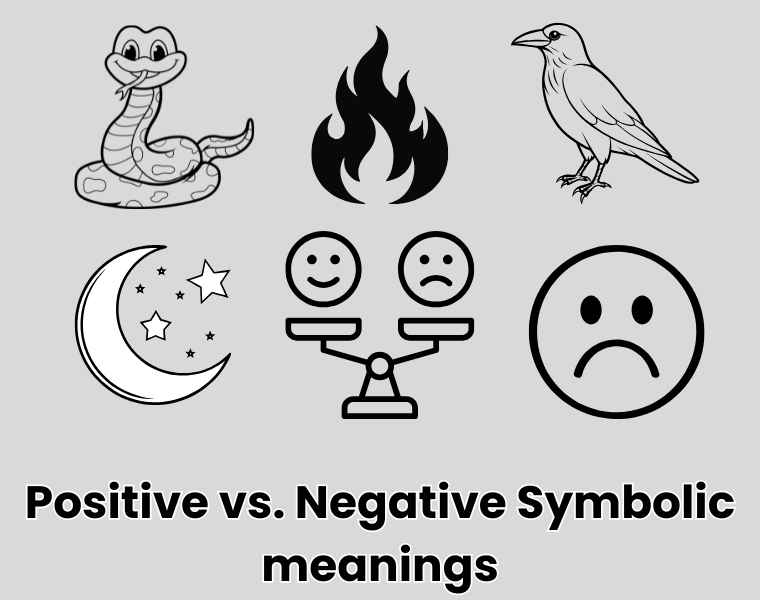
An interesting feature of symbolism is that many have positive and negative emotional associations.
Snake
Positive Meaning are healing, wisdom, transformation.
Negative Meaning are fear, temptation, danger.
Fire
Positive Meaning are passion, purification, motivation.
Negative Meaning are destruction, anger, chaos.
Crow
Positive Meaning are intellect, enigmatic, spiritual insight.
Negative Meaning are death, fear, darkness.
Moon
Positive meanings are intuition, calmness, emotional depth.
Negative meanings are confusion, secrecy, illusion.
Human feelings are complicated, as well as symbols naturally have layered definitions.
Why Humans feel so connected to Symbols?
One of the things that is true about human beings is that they are emotional, and they are searching for meaning. Symbols offer a visual means of experiencing the invisible emotions.
When a person is suffering a heartbreak, they may emotionally associate with the phoenix, due to its symbolism of survival and emotional rebirth. If a person is unsure of life, a compass could offer reassurance of direction and guidance.
Symbols provide emotional safety psychologically. They facilitate the processing of emotions, fears, memories, hopes and identity in meaningful imagery.
Symbolic attachment was also reinforced throughout history, through stories. Dragons, stars, heroes, wolves, angels and magical creatures are something children hear about when they are growing up. Such symbolic images go deep into the subconscious mind.
Symbols also convey meaning for people in their identities without words. Wearing a symbol gives someone the opportunity to express personality, values, emotional experiences and beliefs without explanations.
That’s the emotional power that is why the symbols are forever and forever with each civilization.
Conclusion
Symbols that represent you are more than just symbols and images or decoration. They are languages of the heart that traverse history, culture, spirituality, dreams, and the human soul.
One symbol could represent courage, one could represent pain, one could represent hope, one could represent freedom. One could represent it as transformation, one could represent identity, one could represent emotional survival.
FAQs
Which Is The Most Appropriate Symbol For You?
The ideal symbol can vary from person to person, based on their emotions, personality, values, and life experiences. But meaningful emotional connection is more important than popularity.
Why do humans emotionally relate to symbols?
The human brain receives visual images emotionally and psychologically quicker than words. Symbols resonate and touch the mind and unconscious emotional reactions.
Do symbols have different meanings in different contexts?
Yes. Symbols have different meanings in different times, cultures and lives.
What does symbol show that means about personal growth?
Growth and transformation are often represented by butterflies, phoenixes, lotus flowers, trees and rising suns.
Is There Any Importance To Symbols In Spirituality?
Yes. Symbols are found in all spiritual traditions and represent enlightenment, emotional healing, faith and inner awakening.
Why Symbols are Popular in Tattoos?
The symbolic tattoos are chosen by people as a part of their memories, emotions, identity, beliefs, and their survival.