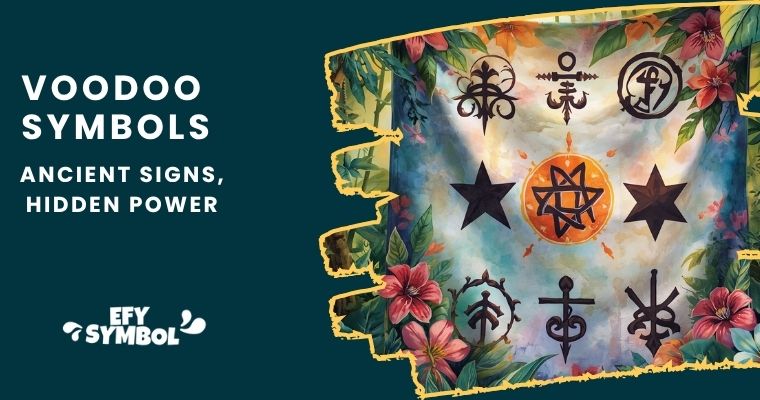
Voodoo symbols have been featured in spiritual practices for hundreds of years. The meaning of these sacred signs is associated with religion, healing, direction, safeguarding and reverence for ancestors.
Individuals look up voodoo symbols to gain an understanding of what they mean, their history and its cultural significance rather than the myths portrayed in the movies.
These symbols are referred to as veves in Haitian Vodou, and have unique significance in African spiritual practices. Some use them in ceremonies while others symbolize love, wisdom, strength or the spirit world.
I first came across these symbols through their association with different people or time periods and how these meanings changed.
As I got to learn more and more, I began to see how these symbols are interconnected with stories of hope, family and tradition.
What are Voodoo Symbols?
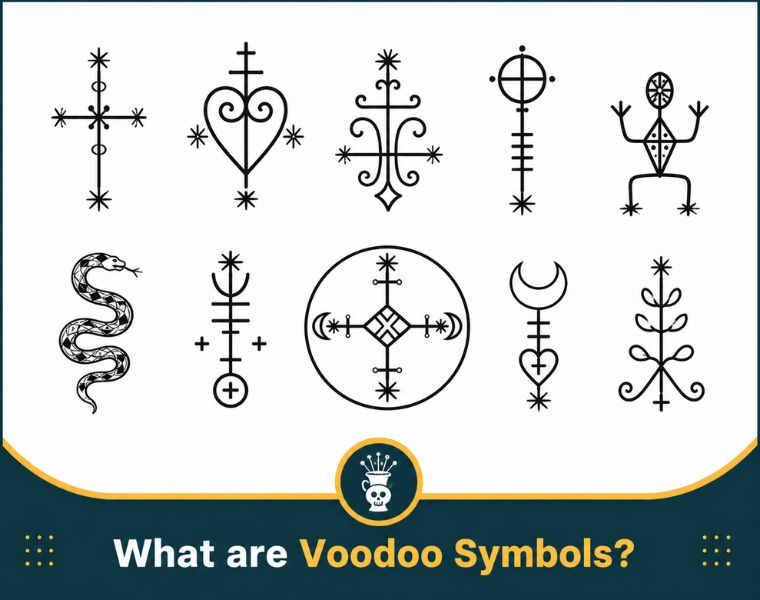
Voodoo symbols are spiritual drawings in the tradition of Haitian Vodou and other African spiritualism that are used to communicate with spirits, pray and perform ceremonies.
Ritual drawings are called veves and typically made on the ground before a ceremony is performed with fine powder, such as cornmeal, flour, chalk, ash, or other fine powder. Each of them is a respected spiritual being known as a Lwa (also called a Loa) and has a specific role.
Some Lwa come to represent healing, some to give guidance, some love, protection, wisdom or courage. Vodou is the West African word Vodun, which means spirit, or deity.
As the years went by, African customs and practices mixed with local beliefs and practices, forming the rich spiritual system we know today as Haitian Vodou.
These are not just random drawings; these are sacred symbols. Each line, circle, cross and pattern has significance and is established within existing traditions handed down from one generation to the next.
They are revereved for their role in communicating faith, honoring their ancestors, and deepening their spiritual bond.
Symbols of voodoo and their meanings
Voodoo symbols and meanings reveal that each veve carries a message and has a purpose. Some of these symbols are a reminder of healing following the hardships, others are a symbol of protection, strength, love, wisdom, good luck or guidance through life-changing events.
One symbol of a voodoo religion can seem straightforward, but may have many concepts associated with it. Voodoo symbolism religion symbols also remind people to respect nature, family, ancestors and community.
Symbols of voodoo are employed in prayers and ceremonies to bring in positive energy and to seek assistance from the Lwa. It is essential to know before applying any symbol of voodoo that each shape has its specific meaning in Haitian Vodou beliefs.
If people are aware of the context from which a symbol came, they value it as a cultural heritage, rather than just art or decoration.
Voodoo Symbols for Love
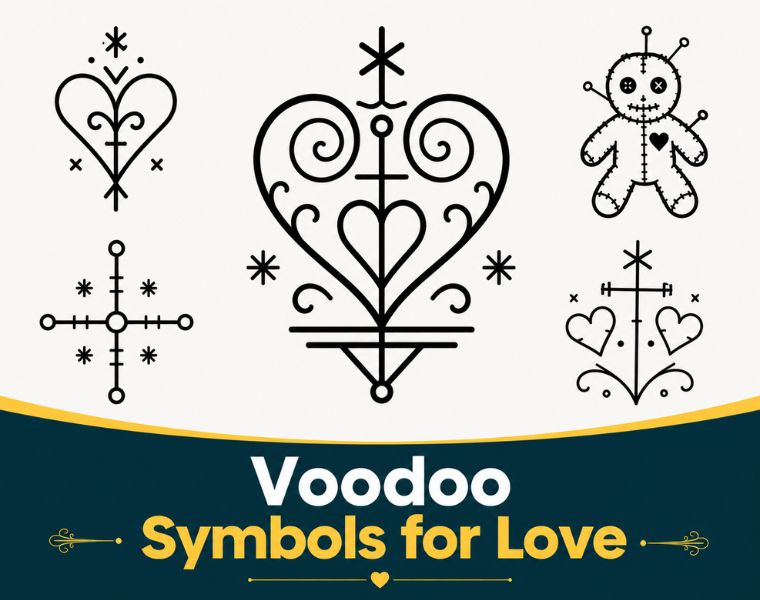
Voodoo Love Symbols are linked to kindness, caring, trust, friendship and long lasting relationships. These are sacred symbols that are frequently associated with good health for families, good health for happily married couples, and good health for peaceful homes.
They make them understand how they can find love through honesty, patience, and respect. They are symbols that are used in many traditions during special ceremonies, which celebrate emotional connection and harmony.
Love inspired veves are also sometimes used in spiritual art, journals, or meaningful gifts, as they embody hope and affection.
These symbols do not manipulate other people’s emotions, but promote healthy relationships that are filled with understanding and compassion.
Their message is clear – love is stronger when people care for and act kindly towards one another.
Symbols of voodoo are used to ward off evil spirits
One of the most famous Vodou protection symbols is the one that is used to ward off evil and harm. These are symbols that many families consider to be magical, or voodoo, to keep homes, family members, and sacred areas safe from negative energy and bad intentions.
Artwork is placed at an altar for protection, and amulets created from traditional veves are worn. People are also encouraged to remember these symbols when times are tough, as well as have faith.
It is not the fear that is protection in Vodou. Rather, it is a matter of peace, safety, balance and confidence found in your daily life.
Whether it’s a small ceremony or a family tradition, protective symbols still play an important role in many spiritual traditions around the world.
Voodoo Symbols for Good Luck
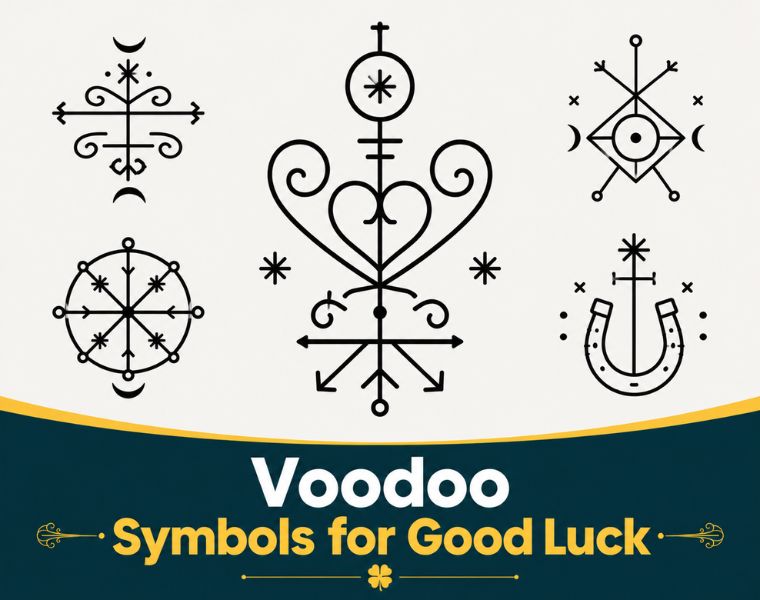
Symbols of good luck are typically related to success, blessings, hope, opportunity, and positive energy in voodoo. These symbols can be part of people’s prayer areas or important pieces of artwork to remind them to remain grateful and to strive to fulfill their goals.
Fortun’ in Vodou isn’t just about luck; it’s about effort, respect and gratitude. These symbols remind them to continue their endeavor when things in their life are not easy.
It is said that a grateful heart receives more blessings than fear and worry. That positive message has kept these sacred designs alive in the hearts of people for many generations and will continue to inspire people in 2026.
Voodoo Symbols for Death
The voodoo symbols for death can be quite terrifying to begin with, but they generally have a peaceful and hopeful message. A death symbol is typically a voodoo image of change, the spirit world, reverence for ancestors, and the life cycle.
For Haitian Vodou, death is not the ultimate end, but a transition from one aspect of life to another. Such symbols are used in ceremonies to commemorate deceased members of the family and the wisdom they imparted while they lived.
These holy symbols serve to remind people that memories, love and family connections last after death. They do not instill fear, but respect, gratitude and remembrance.
Voodoo Hand Signs and Voodoo Signs
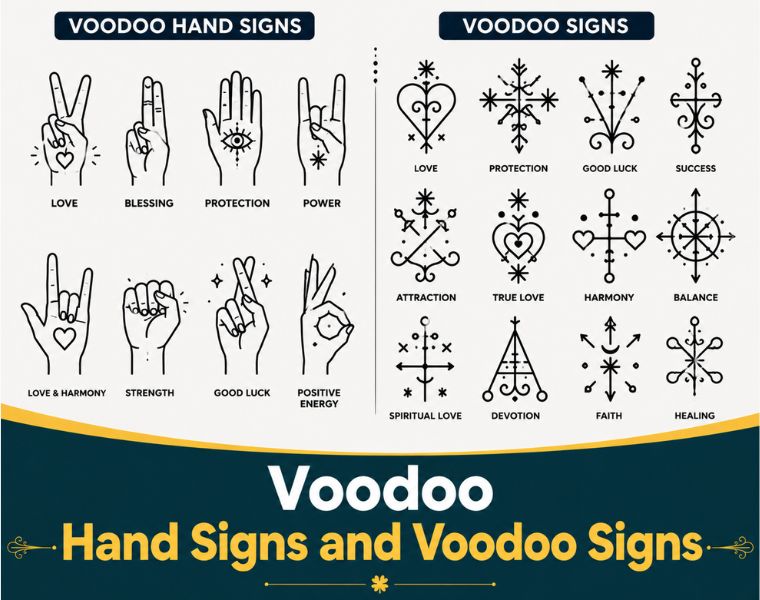
Voodoo hand signs and voodoo signs play essential roles during ceremonies and are used to convey prayers, welcomed blessings and a respect for the Lwa.
However, these gestures and movements are simple and sometimes go hand in hand with the veves, thereby forming a full language of spiritual expressions.
The voodoo signs and symbols are carefully transmitted from generation to generation, and are meaningful to each movement.
Some gestures are meant to greet the spirit; some were to express thanks or to seek guidance. Watching experienced practitioners perform these ceremonies shows how symbols are more than pictures on the ground.
They are now living expressions of faith, community and shared belief that are still linking people to their faith today.
Haitian Voodoo Symbols and Meanings
Some of the most well known symbols of the voodoo religion in Haiti are sacred symbols. They are known as veves, and are carefully drawn in advance of ceremonies, in honor of a particular Lwa.
Haitian voodoo symbols and meanings go hand-in-hand as every symbol conveys a particular message, which is handed down from one generation to the next. Some symbolize healing, others symbolize wisdom, protection, guidance, love, courage, or peace.
The veve is an act of respect and a call to spiritual energy and to concentrate prayers during a ceremony. These lovely patterns are not just art!
These are significant components of Haitian Vodou and are a direct expression of the beliefs, culture and faith of those who still practice it.
African Voodoo Symbols
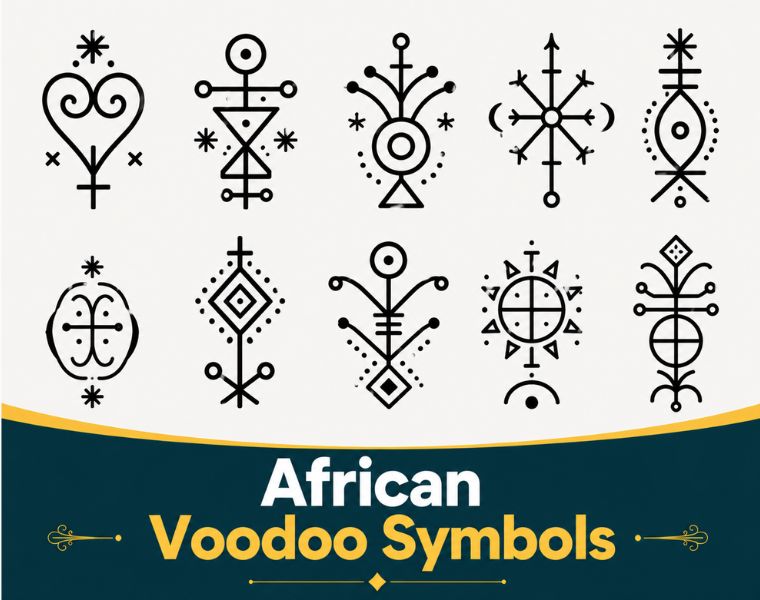
The African symbols used in worship of the Vodou religion form the basis of many practices from the Vodou world we know today.
The roots of their way of life lie in the religion of Vodun, which has been practiced in West Africa for centuries, particularly in Benin and Togo.
These sacred symbols were for divine forces, spirits, ancestors and nature long before they were recognized outside of Africa. Much of the contemporary Haitian Vodou can be traced back to these early traditions.
The designs might differ from one location to another, but they all serve a purpose of honouring, creating spiritual bonds and maintaining the culture.
African spirituality also holds that symbols can help to remind a person of wisdom or family, balance or hope, and can keep the community together through shared beliefs.
Louisiana and New Orleans Voodoo Symbols
Louisiana voodoo symbols and New Orleans voodoo symbols emerged from the fusion between African tradition and local customs and Christianity in the United States.
These holy symbols became incorporated into religious rituals, traditional practices and the culture. Marie Laveau is particularly associated with New Orleans, where her legacy is honored in the tales of faith, healing, and community.
Throughout the city, visitors will find voodoo-inspired art, charms and handmade crafts, but the true meaning of the symbols is still important to those who hold them in reverence.
These practices continue to serve as a reminder that faith, kindness, and cultural identity can endure in challenging times.
Veve Voodoo Symbols and Their Spiritual Role
Veve voodoo symbols are sacred drawings made for the use of rituals and as a greeting of the Lwa. Each veve features its own design using lines, circles, crosses, curves and geometric shapes that assist in recognizing a particular spirit.
Voodoo veve symbols and meanings will help you understand the differences between two unique designs. Each one is named for the spirit it represents, its character, responsibilities and blessings.
Practitioners use flour, chalk, cornmeal, or ash to carefully draw these images in ceremonies, and pray over them. It’s always fascinating to me that one drawing can represent a lot of tradition and respect without any words at all.
This has made veves one of the most significant symbolic expressions of the religion of Vodou in Haiti.
Papa Legba Veve
One of the most respected Lwa of Haitian Vodou, Papa Legba’s veve is commonly the first symbol to be drawn in a ceremony. His design frequently features a crossroads, keys, a walking stick and a bright shape symbolizing guidance.
Papa Legba is said to be the protector of doors between the living and the spirits. It is believed that many prayers pass through him before reaching the other Lwa.
His symbol serves as a reminder for people to make good decisions, not to miss out on opportunities, and to remain patient.
Another lesson the crossroads give is that any decision can affect the future, making Papa Legba one of the most important figures in Vodou traditions.
Erzulie Freda Veve
The design of Erzulie Freda veve is known for its beauty and elegance, particularly for its heart shape, which is often adorned with intricate details and curves.
Erzulie Freda is the personification of love, beauty, kindness, joy, luxury and feminine power. She is frequently associated with the qualities of love, harmony, and compassion within the family. This veve is admired by many as a symbol to remember to act with care and dignity towards others.
Erzulie Freda emphasizes self-worth, generosity, and gratitude, in addition to the romance. Her symbol remains a symbol of inspiration to artists, spiritual practitioners and those who appreciate peace and harmony in their lives.
Baron Samedi Veve
Of course, one of the most well-known voodoo symbols is the Baron Samedi veve, which symbolizes the natural cycle of life, death, transformation and rebirth.
It can have a cross, shapes of coffins, or other religious symbols relating to memory and reverence of the ancestors. While popular culture might portray Baron Samedi as scary, in Haitian Vodou, he has a much deeper meaning.
His message is that all things end, but that all things begin anew; that those who have gone on are never forgotten; that families are forever.
His symbol is a reminder of courage in times of struggle and a lesson in the persistence of life in memory, faith and spirit.
Damballa Veve
The Damballa veve is frequently accompanied by two beautiful snakes intertwined to signify creation, purity, wisdom, life energy, and ancestral power.
The serpent in Haitian Vodou is not a symbol of evil, but of balance, knowledge and the flow of cosmic energy through the world. Damballa is honored as an Lwa of peace, power, harmony, and spiritual development.
Through his veve, people are reminded that nature, family, and faith are interwoven in a multitude of ways.
The smooth curves of this design also symbolize tranquility and patience and it is one of the most popular sacred drawings in the Vodou traditions.
Ogou Veve
The Ogou veve is associated with courage, leadership, protection, strength, justice and determination. It is usually shaped as a sword, machete or daring geometric lines symbolizing action and confidence.
Ogou is recognised as a protector who promotes people’s position to do the right thing and remain faithful to their family and community. His symbol is used in ceremonies when they call for valor, wisdom and support in tough times.
Ogou does not advocate for conflict, but instead teaches people how to utilize their strength fairly and responsibly.
For followers of Haitian Vodou, his veve is a testament to his honor, leadership, and perseverance, and it continues to be a symbol of these qualities today.
Voodoo Symbols within Dreams and within Spiritual Practices
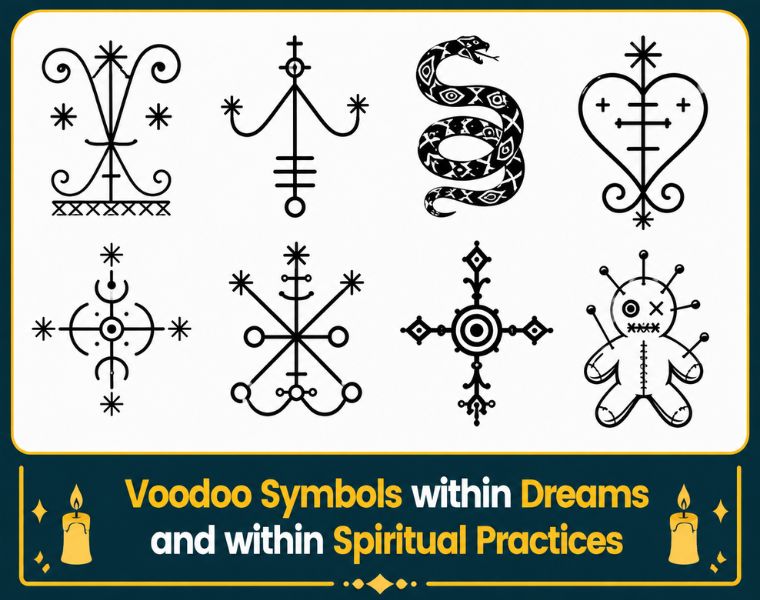
A few people describe seeing the voodoo symbols in their dreams, meditations or when they are quiet and praying. These moments can inspire them to reflect on significant decisions, development, family moments or spiritual advice.
A crossroads can remind someone to carefully choose a path, and a serpentine veve can symbolize wisdom, healing or new beginnings. A cross or coffin symbol can help to remind individuals that there is a new chapter in life after each end.
In Haitian Vodou, the intent of a ceremony is one of the most important elements. The veve is meaningful when drawn in respect, prayer and purpose. It is only a pattern if there isn’t any intention.
Positive and Negative Meanings of Voodoo Symbols
As with many religious icons worldwide, Voodoo symbols mean various things to varying people and cultures. They are positive in meaning to protect, heal, love, guide, give wisdom, give blessings, give courage, connect to their ancestors, give hope.
These holy symbols are often adopted as a way to remember faith, family, and balance in the spiritual realm. Misunderstandings and old stories and movies have created negative associations with voodoo symbols and brought them into a connection with curses or fear.
These ideas are not necessarily shared by the practitioners of Haitian Vodou, who consider these symbols respectful elements of their religion.
The significance of a symbol is not determined by popular entertainment myths but by the tradition, the ceremony and purpose for which it is used.
Alastor Voodoo Symbols
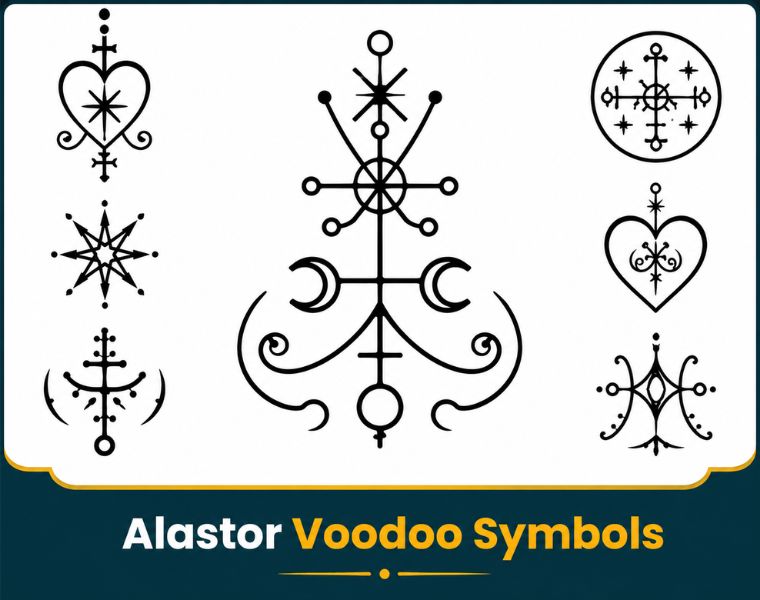
Unlike the traditional veves associated with Haitian Vodou, Alastor voodoo symbols are not as prevalent, but can be found in searches online and in modern discussions.
Other people associate Alastor with stories of justice, revenge or with great spiritual powers rather than with traditional religious practices. Given these varied readings it is crucial to distinguish between historical Vodou beliefs and contemporary entertainment.
As you learn about voodoo symbols, Alastor, make sure to verify your facts with reliable historical accounts to prevent misinterpretation of voodoo practices.
In this way, the reader can grasp the concept of cultural history and the current stories.
Explore the reasons for humans’ attraction to voodoo symbols
Symbols have captivated people since people have existed, as symbols help tell stories without using a lot of words. Voodoo symbols are a blend of sacred geometry, meaningful patterns, cultural strength, spiritual narratives, and emotional resonance, making them undeniably captivating.
Each line of each shape is a reminder of history, tradition, family, and faith. Psychologist Carl Jung theorized that symbols link with universal human thoughts known as “archetypes” that help humans to comprehend feelings and experiences.
It doesn’t matter whether one was studying these sacred signs for education, history, religion or art, they usually walk away with great respect for those who have safeguarded these practices through the ages.
They remain fascinating, and they are more than just pictures that evoke questions:
Voodoovoodoo Symbols
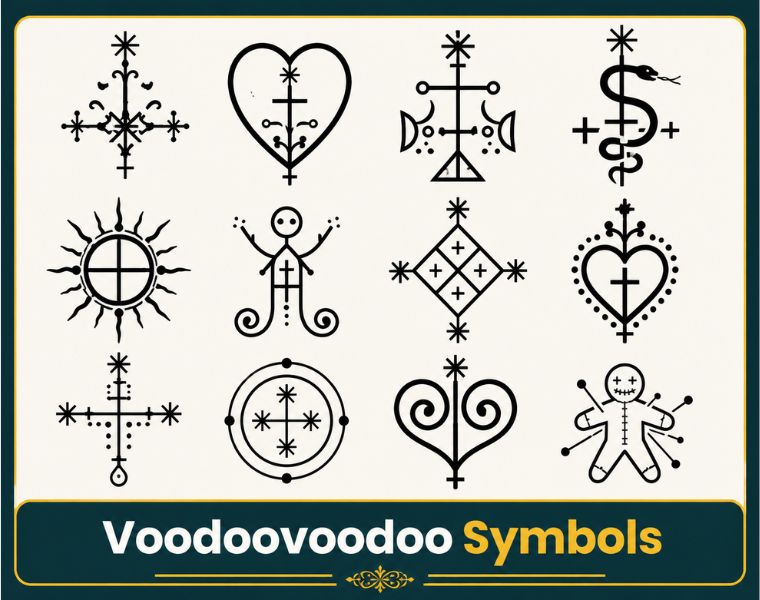
Some sites, blogs, or image collections will include voodoovoodoo symbols and symbols that belong to several other different kinds of religions.
It doesn’t refer to a single symbol, but to a general term that encompasses veves, ritual drawings, protective symbols and spiritual art from Haitian Vodou and its associated practices.
Phrases used when searching for meanings, images, png files, pdfs, tattoos or historical information.
Conclusion
Voodoo symbols remain significant in the realm of spiritual practices, cultural heritage, and historical education in 2026. Each pattern is a tale of belief, strength, community, and reverence for the spirit realm, whether it’s sacred veves of Haitian Vodou or the more traditional symbols of West African Vodun.
Symbols of Papa Legba, Erzulie Freda, Baron Samedi, Damballa and Ogou remind us that these drawings are not popular entertainment myths, but a means of guidance, love, wisdom, courage, protection, transformation and hope.
As I have found in many symbol traditions, the meaning of a symbol is best gained by learning about its history and honoring it with respect.
Taking the time to learn about the meanings of these symbols, whether it’s in the context of education, cultural appreciation, or art and spiritual knowledge.
FAQs
What are the meaning of voodoo symbols?
Veves are voodoo symbols or sacred drawings that depict a particular Lwa and are utilized in voodoo ceremonies for prayer, guidance, healing, protection and spiritual connection.
What do the voodoo symbols mean?
The significance of voodoo symbols are based on the Lwa they represent; each different symbol represents love, protection, wisdom, courage, guidance, healing, transformation, or connection to the ancestors.
Is the voodoo symbols evil?
No. Voodoo symbols are not evil symbols, they are respected symbols of Haitian Vodou and the notion of evil is largely a movie, myth, and misconception, not a fact.
What are signs of voodoo?
Veve voodoo symbols come to represent a specific Lwa and are used to summon the Lwa at events to assist the practitioner in concentration on prayer and spiritual work.
What are the symbols of voodoo in Haiti?
Voodoo Symbols are ancient hauntings known as veves in Haitian Vodou that hold significance in having different meanings for Lwa and importance to ceremonies, worship and culture in Haiti.
What is the difference between Vodou and Voodoo?
The traditional term for the religion practiced primarily in Haiti is vodou, and more commonly the word is voodoo in English, which is used in books, websites and normal conversation.
What do the voodoo symbols mean as a symbol of protection?
Many voodoo protection symbols are associated with Lwa, and are believed to provide some protection, strength, guidance, and spiritual support, and are sometimes used in ceremonies or as a meaningful sacred artwork.