For thousands of years, Buddhist symbols have been used to lead people in simple lessons of wisdom, compassion, mindfulness and inner peace.
Each symbol carries a significant message: Live kindly, with balance and purpose, from the lotus flower to the Dharma Wheel.
In Buddhist teaching, temples, meditation, art and daily life, these sacred symbols assist people to understand the path to enlightenment.
In this guide you will discover the significance of 85 powerful Buddhist symbols, and how they are still used for spiritual development, healing, protection and living in peace in 2026.
Why Buddhist Symbols Still Matter Today
For thousands of years, these sacred Buddhist symbols have shared timeless lessons of wisdom, compassion, mindfulness, and inner peace.
Many practitioners use these powerful symbols during meditation and prayer to support focus, emotional healing, and a calm mind.
They serve as beautiful reminders to live with balance, patience, and respect for every living being.
By including these sacred symbols in temples or homes, people can continue their journey toward spiritual development, while bringing hope, harmony, and positive energy into their daily lives.
The Eight Sacred Buddhist Symbols (Ashtamangala)
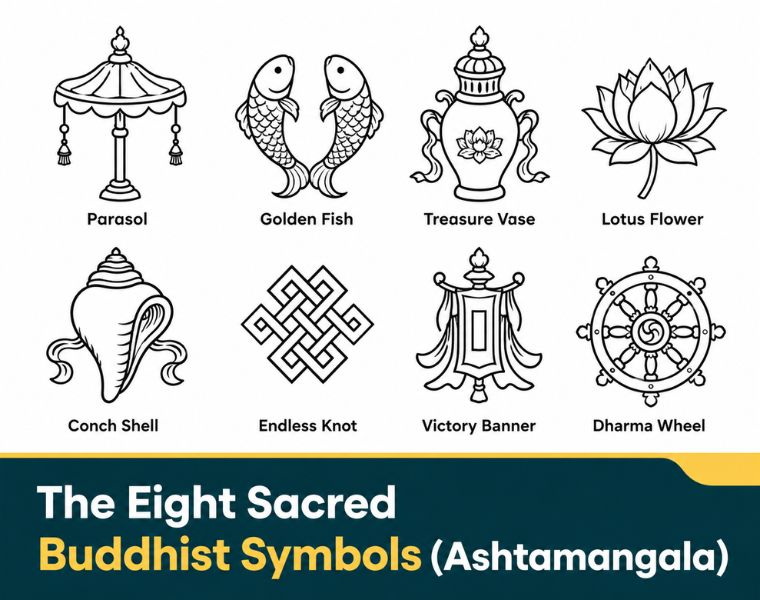
The eight auspicious symbols is one of the most reverent Buddhist symbols known as the Ashtamangala.
These are the lotus flower, the Dharma Wheel, the endless knot, the conch shell, the white parasol, the golden fish, the treasure vase and the victory banner.
Every sacred symbol is a lesson in enlightenment, protection, purity, compassion, wisdom, liberation and spiritual awakening.
In combination they are a way of finding a peaceful life and a reminder of the values of Buddhist philosophy and Buddhist teachings.
Lotus Flower
The lotus flower is one of the most popular symbols in Buddhism, as it grows from dirty water and still comes out nice.
It is a symbol of purity, spiritual development, enlightenment, hope, rebirth and personal change. Like the flower that lifts above the mud, people can lift themselves above the difficulties in life with courage, mindfulness and compassion.
In Buddhism, the lotus is used in art, temples, meditation rooms, jewelry, tattoos and sacred decorations.
Dharma Wheel
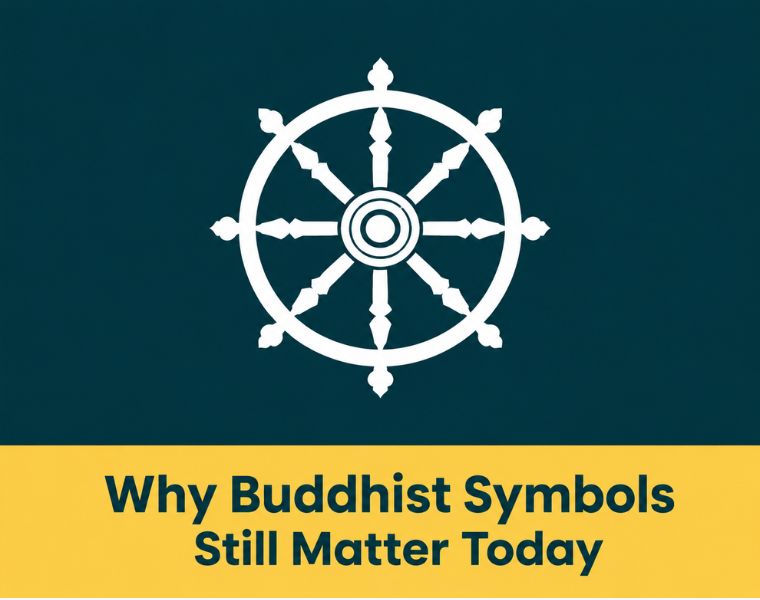
Dharma Wheel (Dharmachakra) symbolizes the Dharma of Buddha and Noble Eightfold Path. It has eight spokes that teach us to make good decisions and to live honorably, kindly and mindfully.
The wheel is also a symbol of the path away from suffering and toward liberation, knowledge and peace. It is used in many Buddhist traditions, including temples, prayer halls, Buddhist flags, and sacred art.
Endless Knot
The endless knot is a symbol that everything is connected in life. It is the wisdom of all eternity, compassion, karma, harmony and the connection between all living things.
It’s a beautiful symbol that reminds us that all actions are meaningful and our choices make an impact on others. It is used in Tibetan Buddhism, sacred art, ornaments, jewelry and for meditation.
Treasure Vase
The treasure vase does not represent material wealth but spiritual wealth. It reminds those of us who are blessed to be kind, wise, generous and compassionate that these are treasures that never end.
The vase is another symbol of abundance, good fortune, blessings, and happiness. This symbol is often used to represent good fortune and tranquility in Buddhist temples and traditional artwork.
Golden Fish
The golden fish symbolize happiness, freedom, courage and fearlessness. They encourage them to walk in their lives with confidence, yet remain at peace and in goodwill.
These fish are also a sign of freedom from suffering and to live without fear. Their elegant gait embodies balance, harmony and joyful living.
Victory Banner
The victory banner is the symbol of the triumph of wisdom over ignorance and goodness over negativity. It brings a reminder to people that difficult moments can be overcome by patience, mindfulness and compassion.
This symbol is used as a catalyst for spiritual development, strength, courage and determination. It is frequently used in spiritual practices and rituals, particularly in religious ceremonies and processions, as a symbol of faith and devotion.
White Parasol
White parasol signifies protection, safety and relief from suffering. It helps individuals to remember that wisdom and good deeds have the power to protect the mind from fear, anger and harmful thoughts.
It is considered to be a symbol of protection and peace in the spiritual world by many followers of the Buddhist faith.
The parasol is frequently used in temples, ceremonies and sacred art to symbolise comfort, compassion and security.
Conch Shell
The white conch shell symbolizes the dissemination of Buddha’s Dharma throughout the world. Its clear sound prompts the people to listen to truth, to be kind, to speak wisdom with others.
It is also a symbol of courage, honesty, awareness and positive communication. In Buddhism, the conch shell is used in rituals, for decorations, and for religious ceremonies.
Other Powerful Buddhist Symbols
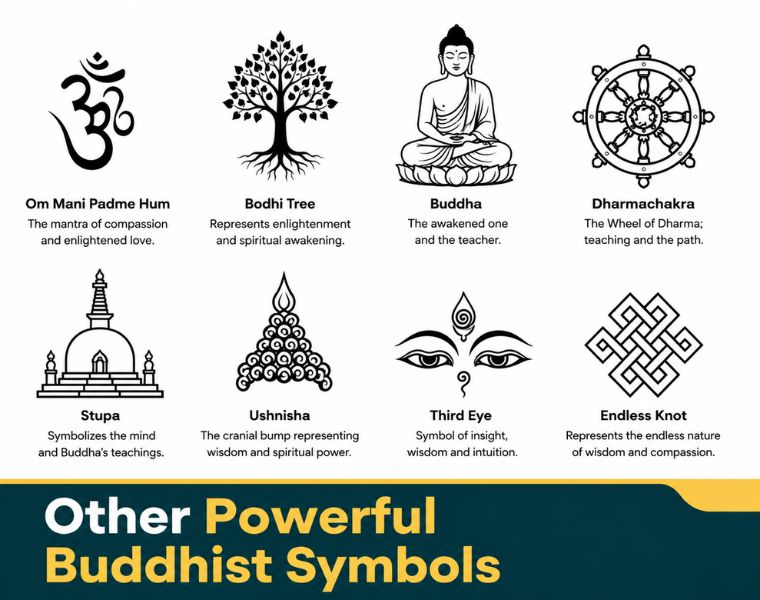
In addition, there are many more sacred symbols of Buddhism, other than the Eight Auspicious Symbols. These symbols are used to convey some of the central principles of meditation, mindfulness, enlightenment, protection, and compassion.
They are found in Buddhist culture, Buddhist art, Buddhist holy architecture, Buddhist prayer chambers, and Buddhist spiritual practices from all parts of Asia.
Every symbol tells an easy-to-follow lesson that helps for personal growth, healing of the emotions and a peaceful life.
Bodhi Tree
The Bodhi Tree is one of the most sacred symbols of the Buddhist faith as Siddhartha Gautama became the Buddha under the tree. This sacred fig tree signifies enlightenment, wisdom, patience and spiritual awakening.
It encourages people to remember that learning, looking at their own experiences of life, and thinking things through, can help them to understand life better.
The Bodhi Tree is still a significant landmark at pilgrimage locations and Buddhist temples today throughout the world.
Buddha Statue
The Buddha is a symbol of peace, compassion, awareness and inner stillness. Mudras are hand gestures with specific meanings related to meditation, protection, teaching and blessing.
The statues elicit people’s consciousness of living in kindness, self-control and respect towards all living beings.
Buddha images are found in many houses, monks’ residences, meditation rooms, and gardens as reminders of mindful living.
Stupa
The stupa is a sacred Buddhist monument symbolizing Buddha’s enlightened mind and the enduring legacy of his teachings. It is a place for prayer, meditation and reflection.
Stupas are common walking around icons to show respect and to reflect on wisdom, compassion and liberation. Stupas can be seen all over India, Nepal, Sri Lanka, Tibet, Thailand and other Buddhist nations.
Vajra
The vajra is a strong Buddhist emblem of strength, valor, resilience and spirit. It is a firm and strong mind that does not break when facing difficulties in life.
Vajra is also a symbol of wisdom and compassion in Tibetan Buddhism. It also serves as a reminder to stay on track, be sincere and dedicated on the journey toward enlightenment.
Mandala
A mandala is a lovely circular pattern which symbolizes the universe, harmony, balance and spiritual awareness. Patterns of mandalas are used during meditation by many people because they help to increase focus and calm the mind.
Colored mandalas are carefully designed by Buddhist monks, highlighting the beauty of impermanence, patience, and mindfulness. The sacred designs are also utilized in the domain of art, prayer, and spiritual learning.
Enso Circle
The Enso circle is one of the most meaningful Zen Buddhist symbols. It is a stroke of a single brush that embodies simplicity, balance, mindfulness, acceptance and the beauty of imperfection.
It helps people to learn to savor the present moment, free from concerns about the past or future. The Enso circle is valued in Zen Philosophy and embodies a peaceful lifestyle.
Buddha Footprints
Buddha footprints serve as a reminder of Buddha’s path and values to his followers. Prior to the common use of Buddha statues for this purpose, these footprints were used as a means of honoring Buddha’s presence.
They represent wisdom, compassion, mindfulness and the path to enlightenment. Buddha footprints are seen in many temples to remind people to live a life of kindness, respect and good actions.
Prayer Wheel
The prayer wheel is an important symbol in Tibetan Buddhism. It holds sacred prayers and mantras which are believed to spread blessings when turned around the wheel.
The prayer wheel is spun while the person thinks of peace, compassion, healing and wisdom. This is a basic exercise that can help build mindfulness and maintain a calm and focused mind.
Mudras
Buddha statues use special hand gestures called mudras and during meditation. Every mudra has a distinct significance related to protection, teaching, meditation, fearlessness, compassion or enlightenment.
These symbolic acts are used to understand the Buddhist teachings without the use of words. The mudras are frequently used in Buddhist iconography, sacred art, monasteries and meditation.
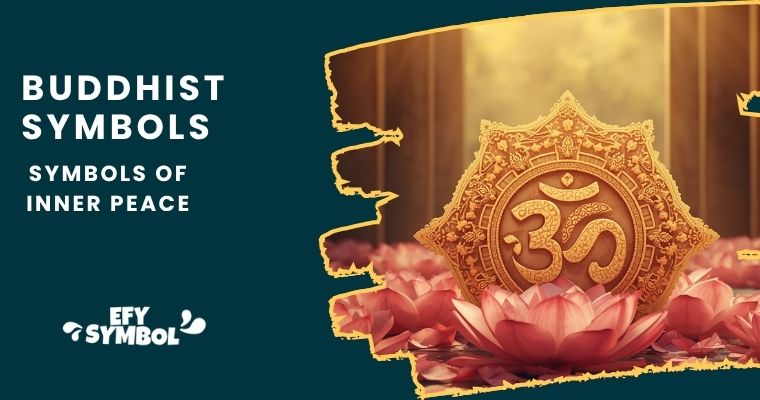
Om Symbol
In many Asian faiths, including certain Buddhist sects, the Om symbol is revered. It is a symbol of harmony, awareness, unity and the relationship between mind, body and spirit.
Om is a mantra that is chanted in meditation to help focus the mind and promote a sense of calm. This sacred sound reminds practitioners to live in balance, kindness and awareness.
Buddhism symbols and their meanings
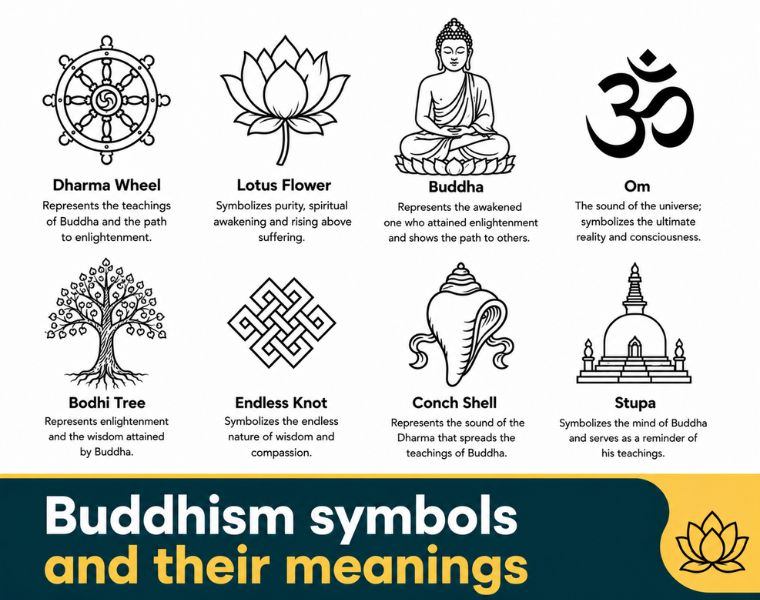
Each of these Buddhist symbols represents a lesson to the people that make them understand life in a simple manner. Some symbols are a sign of enlightenment, others a sign of compassion, protection, healing and balance, courage, love, wisdom or liberation from suffering.
In combination these sacred symbols help to make the Buddhist philosophy easy to understand and remember. They remain as guides to millions on the path of mindfulness, spiritual development and peaceful living.
Buddhist Symbols for Protection
There are a number of Buddhist symbols that were believed to have a spiritual effect and emotional comfort. The white parasol symbolizes protection from suffering, and the infinite knot is a reminder to hold on to wisdom and compassion.
The vajra is a symbol of inner strength, and sacred mantras promote positive thinking. Homes, meditation areas, temples and personal jewelry often serve as the focal points of these symbols to remind people of safety, hope and resilience.
Buddhist Symbols for Inner Peace
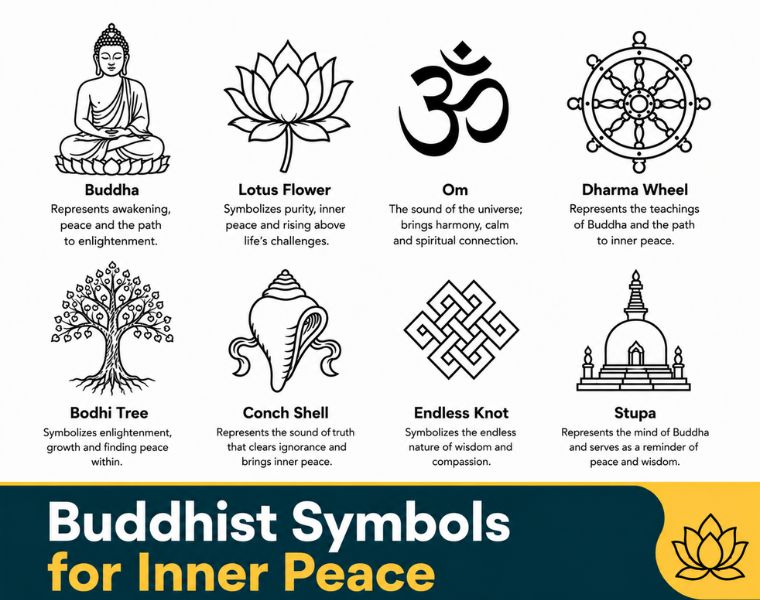
The lotus flower, Buddha figure, meditation pose and the Enso circle evoke tranquility and emotional equilibrium. Each day they remind people to slow down, breath and practice mindfulness.
These calming emojis can help alleviate tension, foster patience, kindness, and self-awareness. They are often used in meditation rooms or truly quiet spaces, to help promote relaxation and spiritual wellness.
Being strong is not just physical in Buddhism, it’s also courage, patience and determination. The vajra symbolizes an unstoppable spirit and the lion, confidence and fearless leadership.
These symbols are meant to inspire individuals, communities, and societies to maintain their positivity during challenging periods and to foster their development with wisdom and compassion.
They remind followers to have a balanced, peaceful mind as the source of strength.
Buddhist Symbols for Love
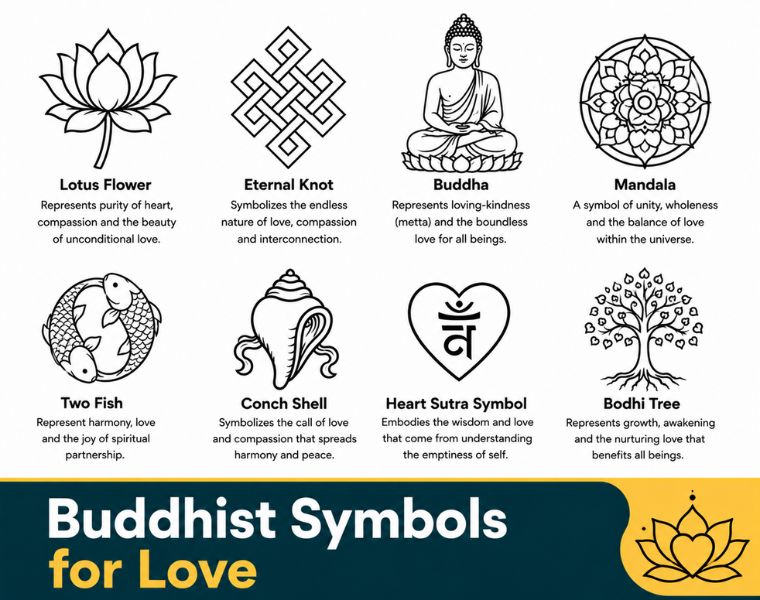
In Buddhism, love is deeply related to compassion, kindness, and caring for all living things.
The endless knot symbolizes commitment to a relationship that lasts for life and unity, and the lotus flower signifies the love of a pure nature which never ceases when life is difficult.
These symbols promote forgiveness, generosity and respect. They remind others to be kind to others, not expecting anything in return.
Buddhist Symbols for Healing
Healing symbols are used to help people concentrate on hope, emotional healing and on inner balance. The lotus flower symbolizes growth in the face of adversity, and the Buddha image is a source of peace and tranquility in thinking.
Mandalas can also be utilized when meditating to focus the mind and to ease stress. These symbols are an invitation for the mind and heart to be nurtured while moving towards a healthy and happy life.
Buddhist Symbols for Success
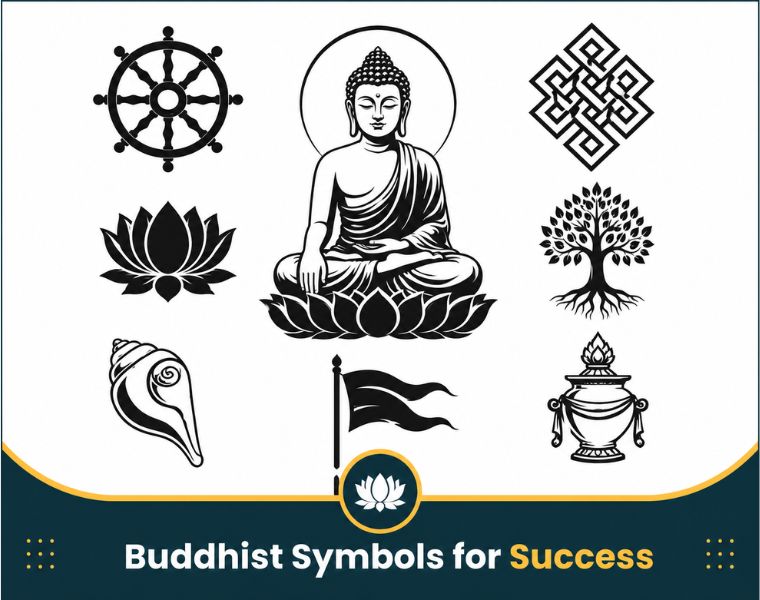
The purpose of success in Buddhism is to increase in wisdom, compassion, honesty and mindfulness, rather than just in wealth.
The Dharma Wheel is to remind people to take the right path while the Bodhi Tree symbolizes learning and personal development.
The treasure vase represents eternal blessings and the victory banner is for the overcoming of bad habits. These symbols should remind others to live a good, patient and kind life.
Buddhist Symbols for Meditation
Very important in Buddhism is meditation and many symbols aid in calming and focusing the mind. A peaceful ambiance for quiet reflection is created by the lotus flower, mandala, Buddha statue, prayer wheel, and the meditation mudras.
These sacred symbols help to bring awareness, to balance and heal the emotions. They call upon people to slow down their thoughts, and enjoy the present moment with a peaceful heart.
Buddhist Symbols in various traditions
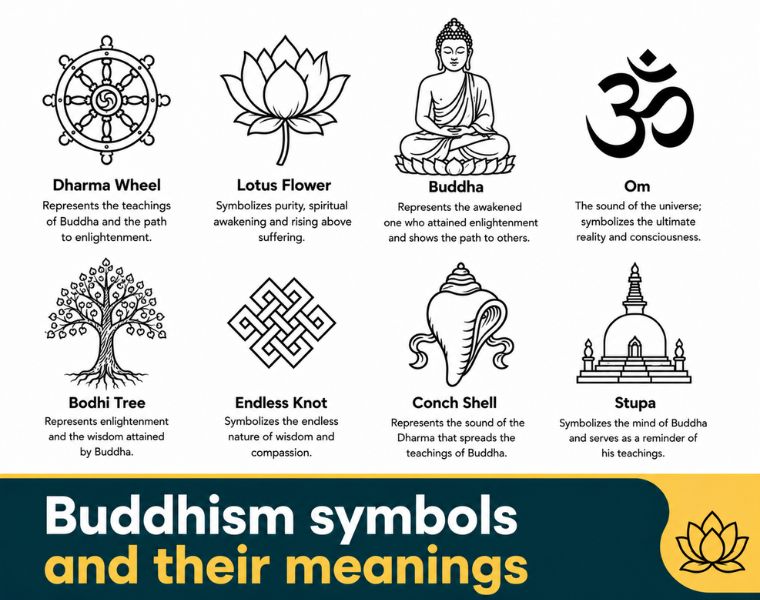
While there are other traditions in Buddhism, most of the symbols have the same message to offer: compassion, wisdom, enlightenment, and inner peace.
These sacred symbols are represented in each tradition in a different artistic style but with the same spiritual context.
This has a lot to do with the richness of the symbolism which links together followers from various countries and cultures, and which helps to preserve the teachings of Buddha.
Tibetan Buddhism
The Tibetan Buddhism is famous for its beautiful religious art and elaborate religious symbols. In everyday practice, prayer wheels, mandalas, vajras, the endless knot and the Eight Auspicious Symbols have a special significance.
The symbols are used for meditation, rituals, visualization and compassion. They encourage their followers to become patient, wise, resilient and spiritually aware.
Zen Buddhism
Zen Buddhism is about living simply, being mindful, and living in the present moment. The Enso circle and basic brush paintings represent serenity, openness and equilibrium.
These symbols are used by Zen practitioners to help calm the mind and concentrate during meditation. They are simple in appearance but have significant lessons to teach in regard to awareness and peaceful living.
Theravada Buddhism
Theravada Buddhism adheres to many of the earliest Buddhist teachings. The Buddha footprints, the simple Buddha images, the Bodhi Tree, the Dharma Wheel are all symbols designed to remind followers to practice morality, mindfulness and wisdom.
These sacred icons inspire individuals to lead a righteous life, refrain from evil deeds, and persist in their efforts for enlightenment in a patient and persistent manner.
Mahayana Buddhism
Compassion is an important value and practice in Mahayana Buddhism and in all living beings. Symbols like the lotus flower, the images of Bodhisattvas, the Dharma Wheel, and the sacred temples symbolize such qualities as kindness, wisdom, and selfless service.
These symbols remind the followers that the happiness is increased when they take care of others and also increase their own happiness by practicing mindfulness and doing good deeds.
Buddhist Symbols in Modern Life
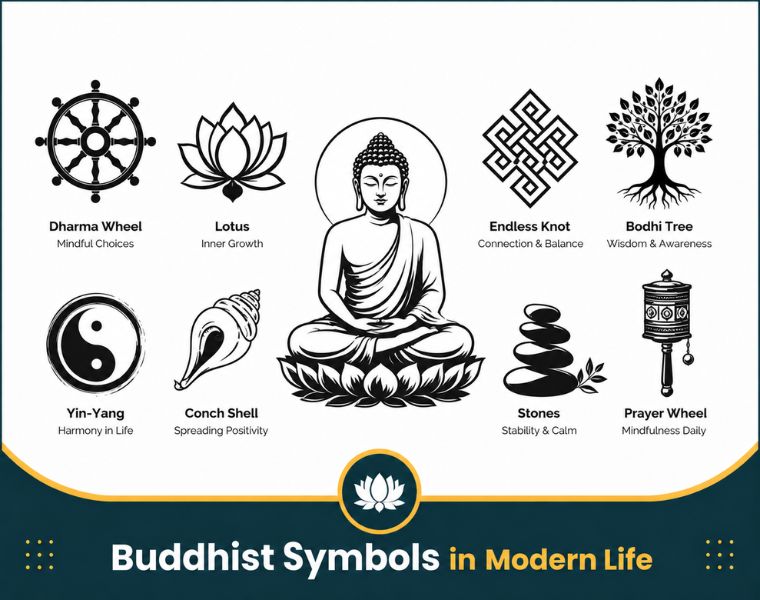
Nowadays, Buddhist symbols can be seen outside the temples and monasteries. They’re utilized in jewelry, tattoos, residence decor, meditations rooms, art, yoga studios, garments, and spiritual presents.
People select these symbols for a number of reasons and they are for peace, healing, balance, compassion and self-awareness.
They are popular with people everywhere but their spiritual significance must never be disregarded and misinterpreted.
Posting about Buddhist Symbols
The use of Buddhist symbols may be simply for their beauty and not for understanding their meaning. Some people don’t understand their function, or view them as decorative.
All sacred symbols have cultural and spiritual significance which must be respected. Knowing these meanings enrich people’s understanding of Buddhist philosophy and prevent confusion or misunderstanding.
How to select an appropriate Buddhist symbol
There’s no optimal Buddhist symbol, it depends on the inspiration that it brings you and does it support your journey.
A person who wants to attain inner peace may select the lotus flower, a person who wants wisdom may select the Dharma Wheel, and a person who wants strength may select the vajra.
Some others may choose the endless knot for harmony, others the Bodhi Tree as a symbol of spiritual development.
Selecting a symbol with an understanding will help it serve as a helpful reminder of compassion, mindfulness, balance and positive living.
Conclusion
Buddhist symbols still resonate with people because they impart universal wisdom in a visual format. All the symbols inspire and remind us to practice wisdom and compassion, to cultivate mindfulness and to find inner peace.
These are sacred symbols to remind us that we have the power to grow through every act of kindness and every thought we have.
Respecting their meanings, anyone can enjoy the beauty, history and spiritual value they have in everyday life.
FAQs
What is the number one most important Buddhist symbol?
The Dharma Wheel is one of the most significant Buddhist symbols, symbolizing Buddha’s teachings, the Noble Eightfold Path, wisdom and the path to enlightenment.
Buddhism is a religion that uses symbols. Which of the following is a symbol that represents peace?
The lotus flower is one of the most popular symbols of peace, purity, mindfulness and spiritual awakening as it blossoms well in dirty water.
Which Buddhist symbol offers protection?
The white parasol, endless knot and vajra are often associated with spiritual protection, bravery, strength and the ability to ward off negative influences.
Is anyone familiar with any Buddhist symbols?
Yes. With knowledge and respect of Buddhist culture and traditions, people from all backgrounds will be able to appreciate Buddhist symbols.
In Buddhism, what does the lotus flower symbolize?
The lotus flower symbolizes purity, hope, enlightenment, rebirth, compassion, and personal transformation, demonstrating the emergence of beauty out of hardship.