Music is a language that is accessible to all ages and cultures. Music symbols are easy to read, play and share. They play a crucial role in transforming individual notes into musical compositions and rhythms.
These symbols have been used to pass on stories, feelings and traditions for thousands of years, from ancient temples to modern concert halls.
But they are also used in art, fashion, jewelry, tattooing and digital media, suggesting that their meaning extends beyond sheet music.
Learning musical symbols can be beneficial to anyone who wants to learn or is a life-long fan of music, as it will help them comprehend how music ties others across the globe together.
What Are Musical Symbols?
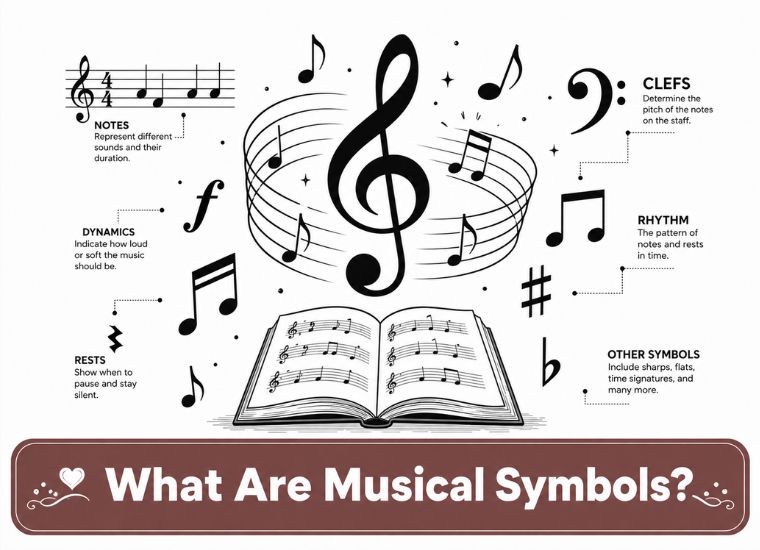
Music symbols are visual representations that are used for music notation to indicate pitch, rhythm, tempo, harmony, silences and performance direction.
They instruct musicians when to play, when to pause, how loud to play and for how long each note should be played. Music lovers would not have been able to remember or share the music without these symbols.
I vividly recall my first sighting of a sheet of music. When it was just a bunch of weird symbols, I learned a few of the symbols, and saw that there was a meaning to every one of them.
They create a universal language that can be understood by anyone who plays music, including traditional classical types, jazz, folk and contemporary digital music.
The History of Musical Symbols
Long before the advent of printed music books; the history of musical notation started. The ancient civilizations, such as Mesopotamia and Greece, developed early melody recording systems to mark melodies for ceremonies and worship.
Simple markings to assist in conservation of songs for future generations. Neumes were used by monks in the Middle Ages to help singers with religious chants.
Eventually these signs became the five-line staff that is used in music notation today. As the composers of Bach, Mozart and Beethoven developed more detailed compositions, they added symbols to indicate the tempo, dynamics, rest and expression.
This traditional music language is now exploited in orchestras, choral groups, schools, recording studios, film music, and computer music software programs, and remains as relevant as ever with the symbols it produced.
Why Musical Symbols Matter
Musical symbols are more than just a way of structuring sounds. They assist musicians to express feelings which words may fail to describe.
One note can evoke a childhood memory, the rest can establish silence leading to an approaching phrase. Symbols also preserve the history of music from generation to generation by enabling accurate performance of the songs.
They are employed by students for studying music theory, by teachers for teaching the concepts of rhythm and melody, and by performers for communicating with each other.
Therefore, musical notation still is one of the greatest instruments ever invented to capture creativity and artistic expression.
Spiritual Meaning of Musical Symbols
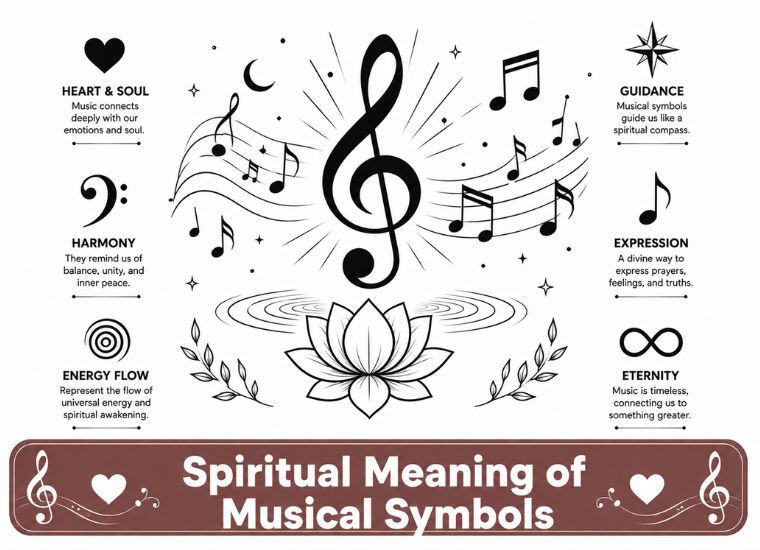
Music is related to the human spirit in many cultures. Peace, balance, healing and hope are frequently symbolized by music. They can convey ideas of personal development with a rising note, and calm vibes with smooth melodies.
The treble clef is a popular design in jewelry and tattoos and considered to be a symbol of creativity and artistic freedom.
In the past, rhythm and melody have been used by various spiritual leaders, monks, and healers to provide comfort and unity to a community.
To this day, it is soothing for people to hear harmonies, as harmony can create a sense of emotional balance.
Psychological Meaning of Musical Symbols
The music is a great force in the mind. Musical symbols are used to remind people of significant times, special events or people who are loved. Rythm is a natural response to the human brain as the heartbeat is following a steady pattern.
Musicians are converting a visual symbol to an emotional experience when they read notes on a staff.
This is what makes music fun for everyone of any age. A quiet rest symbol can evoke suspense, a strong accent can provide energy to a performance.
These little symbols demonstrate the effect of written music on powerful emotions, without relying on a single spoken word.
Cultural Meaning of Musical Symbols
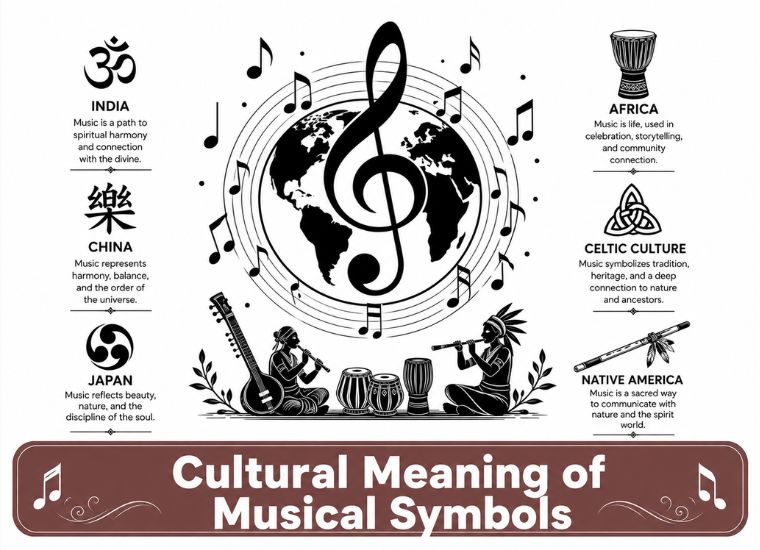
Around the globe musical symbols have various meanings, but the same purpose; to unite people. Ancient Greek philosophers thought that music shared harmony in the universe and that they found harmony in numbers and mathematics in beauty.
In classical music of India, music notation is coupled with a set of ragas, which evoke various moods, weather and different periods of the day.
Chinese culture associates music with harmony between nature and society, and African culture employs rhythm and drum patterns to narrate stories and celebrate the community life.
Western classical music evolved a highly notated musical system which enabled joy, sadness, courage, and celebration to be expressed very accurately.
While the traditions vary from culture to culture, music symbols have remained a vehicle of connectivity for humanity through creativity and emotion.
Most Important Types of Musical Symbols
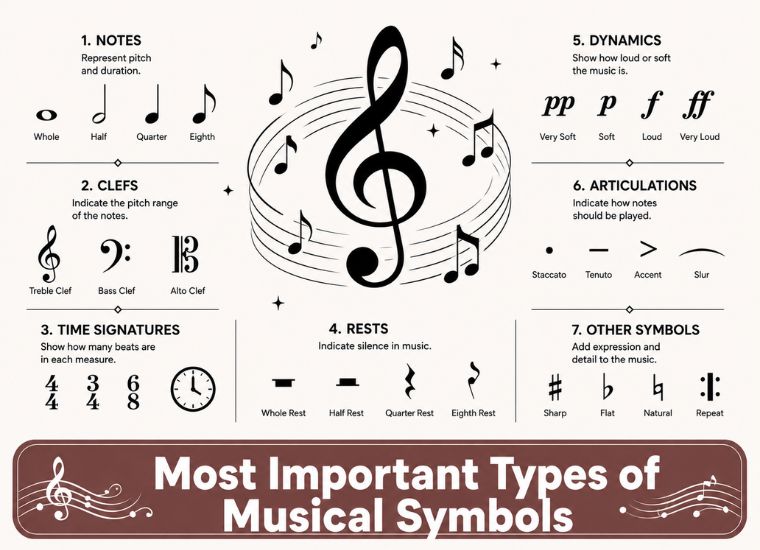
Music notation uses many symbols, and each one has a special job. Here are some of the most common musical symbols and their meanings.
Treble Clef
- Represents high-pitched notes.
- Common in piano, violin, flute, and vocal music.
- Symbolizes creativity and artistic expression.
- Often seen in tattoos and jewelry.
Bass Clef
- Represents low-pitched notes.
- Used for bass guitar, cello, trombone, and left-hand piano music.
- Symbolizes strength, balance, and stability.
Musical Notes
- Show the pitch and length of a sound.
- Form the melody of a song.
- Found in every style of music notation.
- Represent memories, feelings, and creativity.
Rest Symbols
- Tell musicians to stay silent for a short time.
- Help create rhythm and balance.
- Show that silence is just as important as sound.
Sharp Symbol (#)
- Raises a note by one semitone.
- Adds brightness and energy to music.
- Often represents change and excitement.
Flat Symbol (♭)
- Lowers a note by one semitone.
- Creates a softer sound.
- Often linked with calmness and reflection.
Natural Symbol (♮)
- Returns a sharp or flat note to its original pitch.
- Represents balance and a fresh beginning.
Musical Symbols Across Cultures
Musical symbols have been part of many cultures for thousands of years.
- Ancient Greece connected music with mathematics, harmony, and beauty.
- Indian classical music uses ragas to express seasons, emotions, and different times of the day.
- Chinese traditions link music with peace, nature, and social harmony.
- African traditions use rhythm, drum patterns, and songs to tell stories and celebrate community life.
- Western classical music uses detailed notation to guide musicians with accuracy and emotion.
Musical Symbols in Art, Movies, and Popular Culture
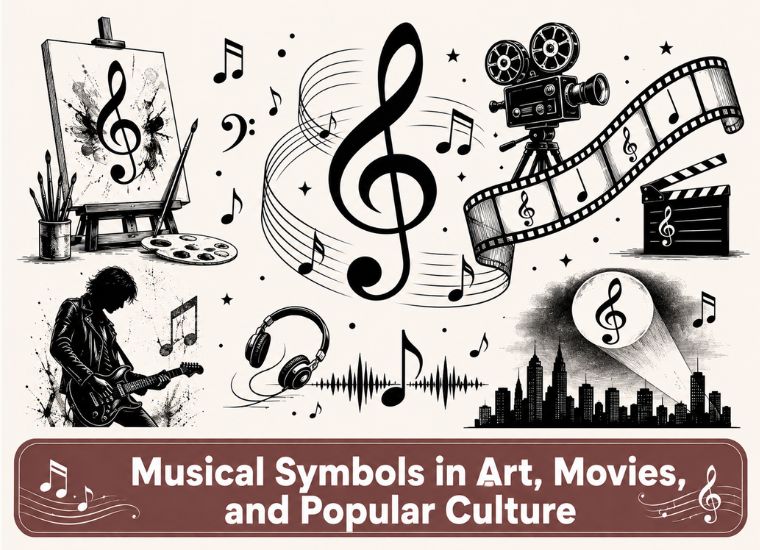
Today, musical symbols are found almost everywhere, not only in sheet music.
Movies
- Show passion, hope, and personal growth.
- Help tell emotional stories through film scores.
Paintings
- Represent creativity and imagination.
- Often appear with musical instruments.
Books and Poetry
- Symbolize memories, dreams, and emotions.
- Compare life to rhythm and melody.
Tattoos
- Treble clef
- Musical notes
- Piano keys
- Song lyrics
- Heart-shaped notes
Fashion and Jewelry
- Necklaces
- Bracelets
- Earrings
- T-shirts
- Hoodies
- Graphic designs
Musical Symbols in Modern Digital Culture
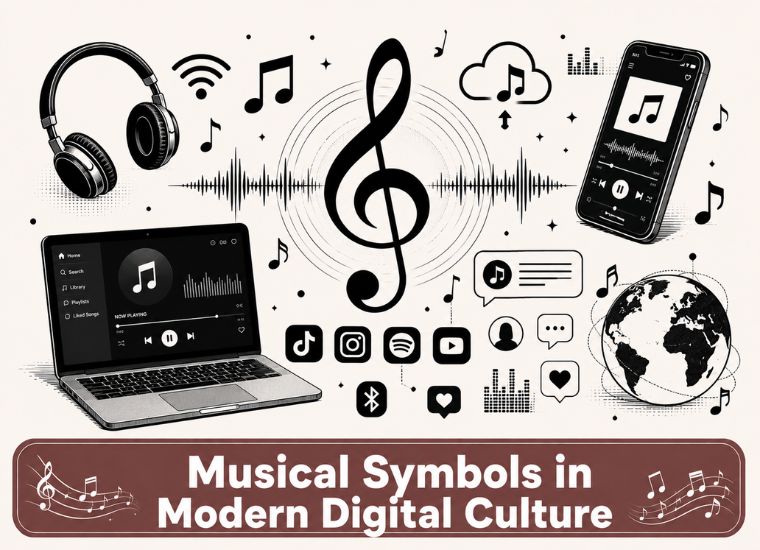
Musical symbols continue to grow with technology. Today they appear in:
- Social media profiles
- Streaming platforms
- Brand logos
- Emoji collections
- Video games
- Digital art
- AI music production
- Music learning apps
Even in the digital world, these symbols still represent rhythm, harmony, emotion, creativity, and the universal language of music.
Spiritual and Dream Meaning of Musical Symbols
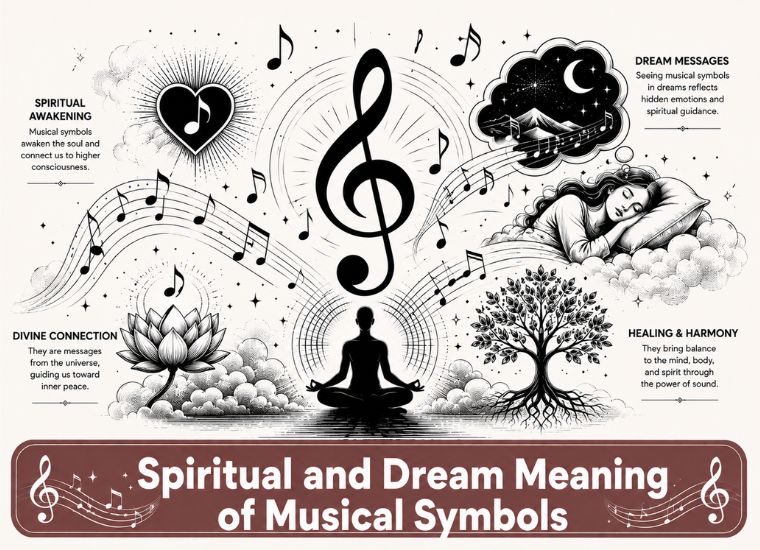
Music speaks to both the heart and the mind. Many people see musical symbols as signs of hope, healing, and inner peace.
Spiritual Meaning
- Represents harmony between people and nature.
- Symbolizes peace, hope, and emotional healing.
- Encourages creativity and self-expression.
- Reminds people to stay balanced in life.
- Often reflects a connection between the soul and music.
Dream Meaning
- Musical notes may suggest happiness and new ideas.
- A treble clef can represent creativity.
- A bass clef may symbolize strength and stability.
- Rest symbols often mean it is time to slow down and relax.
- Broken musical symbols may show stress or blocked creativity.
- Hearing music without seeing the source may represent guidance or intuition.
Positive Meaning of Musical Symbols
Musical symbols often remind people of the brighter side of life.
- Creativity
- Harmony
- Joy
- Love
- Unity
- Passion
- Freedom
- Emotional healing
- Inspiration
- Balance
- Peace
- Confidence
- Artistic expression
- Personal growth
Negative Meaning of Musical Symbols
Like music itself, symbols can also reflect difficult emotions.
- Sadness
- Grief
- Loss
- Loneliness
- Emotional pain
- Fear
- Isolation
- Emotional conflict
- Blocked creativity
- Escapism
- Stress
- Emotional chaos
Why People Love Musical Symbols
People connect with musical symbols because they remind them of special moments.
- They preserve music for future generations.
- They help musicians read and perform songs.
- They represent memories and emotions.
- They inspire creativity and imagination.
- They are popular in tattoos, jewelry, and artwork.
- They create a universal language understood around the world.
Conclusion
Musical symbols are more than just dots, dashes and notes on a score. They are an evergreen language that facilitates the expression of rhythm, melody, harmony and emotion.
From sheet music to tattoos, fashion, films, and social media, musical symbols serve as a reminder of the healing, inspiring, and unifying force of music.
When you know what the songs mean, they’re even more special.
FAQs
What are the symbols used in music?
Musical symbols are graphic signs that indicate pitch, rhythm, tempo, silence and expression in music notation.
What’s the world’s biggest hit song?
The treble clef is the most famous of all musical symbols.
What are musical symbols used to do?
They assist musicians in the accurate reading, writing, performing and preservation of music.
Is the music used for spiritual purposes?
Yes. They are linked to many people with harmony, peace, healing and creativity.
What is the significance of the musical note tattoo?
They are frequently personal recollections, a passion for music, freedom or personal experiences.
Are there any musical symbols in dreams?
Yes. Their meanings can be emotional, inspirational, healing or personal development.
Does music have the same symbols in all countries?
A great majority of the symbols used for modern music can be found in many countries around the world, but music traditions might vary.