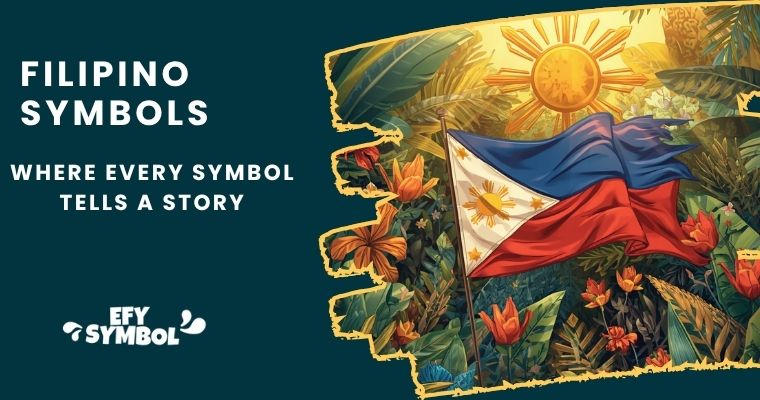
🇵🇭 Filipino symbols are a form of symbols, objects, patterns, and images that convey the story of the Filipino people. They represent the country’s history, culture, tradition, belief, and national identity.
Before books were prevalent, many communities communicated ideas, honored ancestors, sought protection, and expressed their appreciation for nature through symbolism in their tattoos, carvings, weavings, flags, clothing, and rituals.
Over time, native traditions blended with Spanish, American, and Asian influences, resulting in symbols with deep cultural significance.
Today, these symbols continue to connect the past and present, reminding Filipinos of courage, resilience, freedom, unity, faith, family, traditions, and national pride.
Why Filipino Symbols Still Matter Today
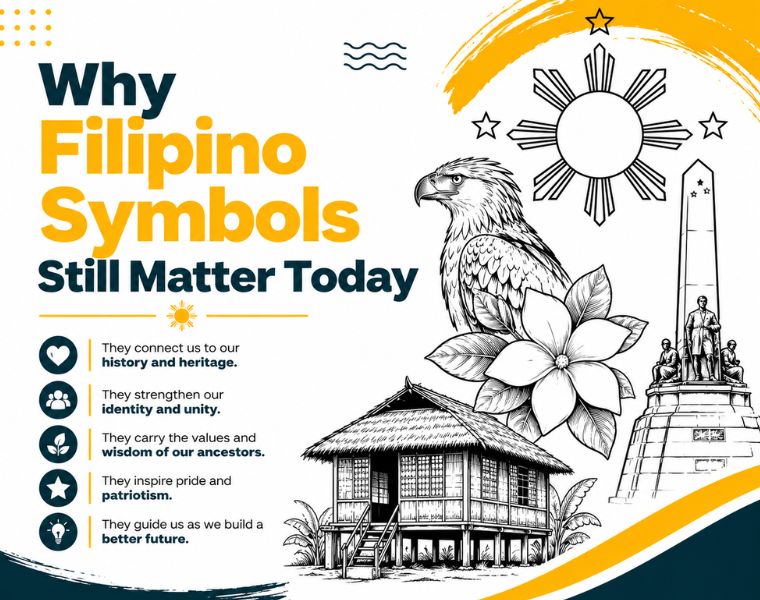
Filipino symbols remain relevant because they help preserve cultural heritage and maintain traditional values.
These symbols are widely seen in schools, festivals, museums, artwork, tattoos, clothing, jewellery, architecture, literature, and national celebrations.
They inspire respect for ancestors, reinforce family values, and remind Filipinos of their shared history. Around the world, people also embrace these symbols to preserve their heritage and express patriotism.
From ancient tribal designs to modern artworks, Filipino symbols continue to tell stories of hope, strength, identity, community, resilience, and belonging. 🌟
Some of the Old and Traditional Symbols of the Philippines
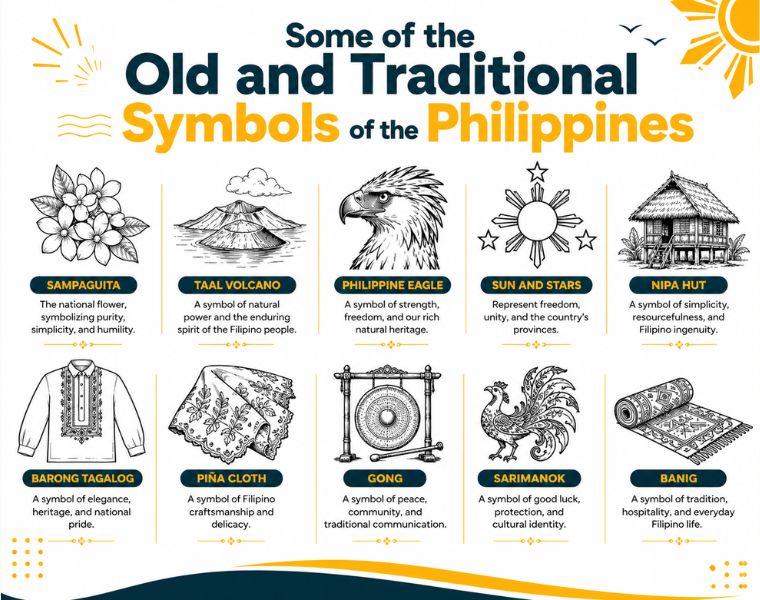
The ancient and traditional symbols of the Philippines offer insight into the lives of early inhabitants.
Before modern writing systems developed, many native communities communicated ideas through wood carvings, weaving patterns, pottery, body markings, jewelry, clothing, and sacred objects.
These symbols represented courage, protection, wisdom, fertility, peace, nature, family, honor, leadership, and spiritual beliefs.
They remain visible today in cultural programs, museums, local crafts, architecture, artwork, and educational initiatives. 🏺
Sarimanok
The Sarimanok is an iconic traditional Filipino symbol, particularly among the Maranao people of Mindanao.
This mythical bird represents good fortune, prosperity, power, honor, and leadership. It is often depicted holding a fish in its beak, while its vibrant feathers symbolize beauty, abundance, and success.
The Sarimanok remains one of the most recognizable symbols of Filipino art and tradition, appearing in paintings, carvings, textiles, festivals, and cultural performances. 🐦
Baybayin Script
Baybayin is one of the oldest writing systems in the Philippines and predates Spanish colonization. It symbolizes knowledge, communication, education, history, and cultural identity.
Today, Baybayin is celebrated through tattoos, logos, artwork, fashion, jewelry, books, and digital media, helping younger generations appreciate the linguistic heritage of the Filipino people. ✍️
Anito Figures
Anito figures are carved images made of wood or stone that represent ancestors and spiritual guardians.
Early Filipino communities believed these figures provided protection, guidance, healing, blessings, and a connection to the spirit world.
Although beliefs have evolved, Anito figures remain important symbols of indigenous heritage and are displayed in museums, historical collections, and educational exhibits. 🗿
Okir Patterns
Okir is a traditional Maranao artistic style characterized by elegant floral, vine, foliage, and geometric motifs.
These intricate patterns symbolize beauty, creativity, harmony, strength, and cultural pride.
Okir designs continue to inspire artists, architects, designers, and craftsmen, appearing in houses, furniture, musical instruments, clothing, boats, and ceremonial objects. 🌺
National Symbols of the Philippines
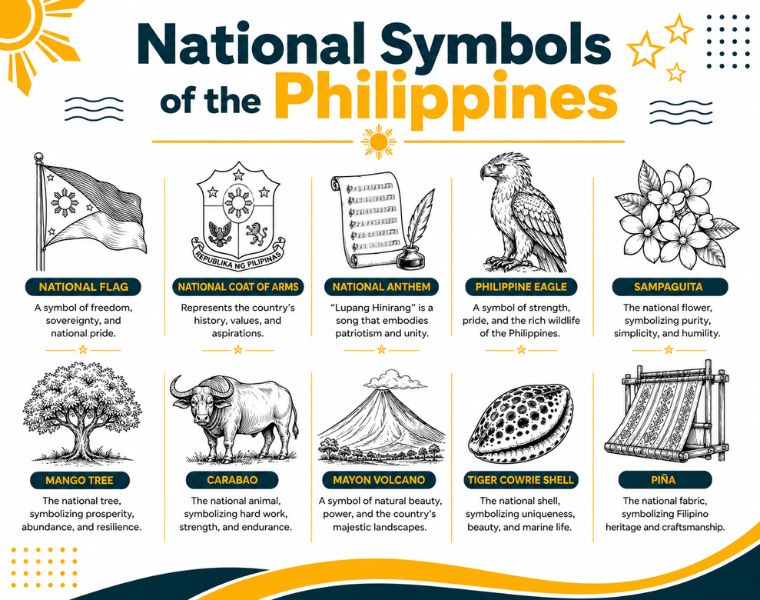
The national symbols of the Philippines reflect the country’s freedom, history, culture, and unity.
They honor the sacrifices of heroes, celebrate natural treasures, and foster patriotism, courage, hope, and respect for the nation.
These symbols appear in schools, government institutions, museums, textbooks, coins, stamps, and national celebrations. 🏛️
Philippine Flag
The Philippine flag is the most important national symbol of the country. The blue stripe represents peace, truth, and justice, while the red stripe symbolizes courage, bravery, and patriotism.
The white triangle stands for equality, freedom, and unity. The sun’s eight rays honor the first eight provinces that fought for independence, and the three stars represent Luzon, Visayas, and Mindanao.
The flag remains a powerful emblem of freedom and national pride. 🚩
Philippine Eagle
The Philippine Eagle is the national bird and one of the rarest eagle species in the world.
It symbolizes strength, courage, freedom, resilience, and environmental protection.
Found only in the forests of the Philippines, it reminds people of the importance of conserving wildlife and preserving the nation’s rich biodiversity. 🦅
Narra Tree
The Narra is the national tree of the Philippines and symbolizes strength, endurance, stability, and lasting beauty.
Renowned for its durable hardwood and golden blooms, it serves as a reminder that strong roots, perseverance, and resilience enable people to overcome life’s challenges. 🌳
What are Filipino symbols?
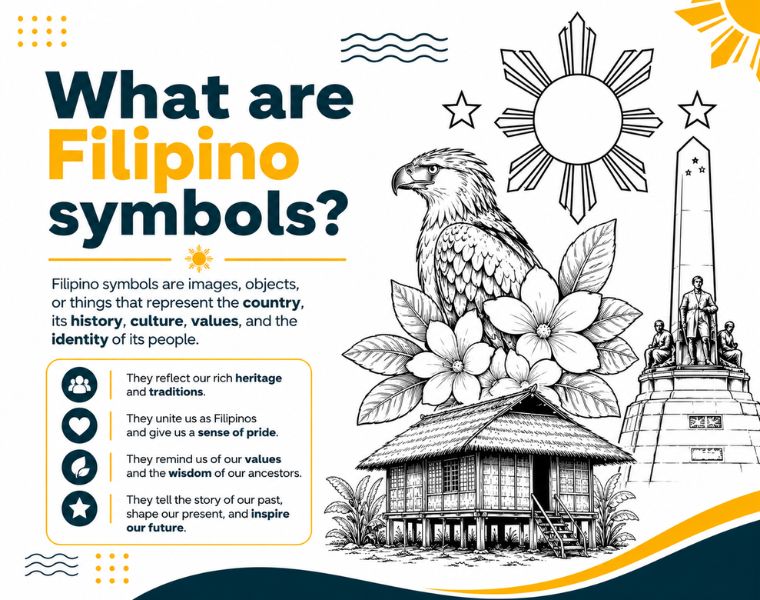
Filipino symbols are a form of symbols, objects, patterns, and images that convey the story of the Filipino people. They represent the country’s history, culture, tradition, belief and national identity.
Before books were prevalent, many communities communicated ideas, honored ancestors, sought protection, and expressed their appreciation for nature through symbolism in their tattoos, carvings, weavings, flags, clothing and rituals.
Over time native traditions blended with Spanish, American and Asian influences, resulting in the creation of symbols with deep cultural significance.
The symbols of the Filipino people today continue to tie the past and present together. They are a reminder of the people’s qualities of courage and resilience, of freedom, unity, faith, family, traditions that formed the Philippines, and of pride.
The Philippines Has a Variety of National Symbols
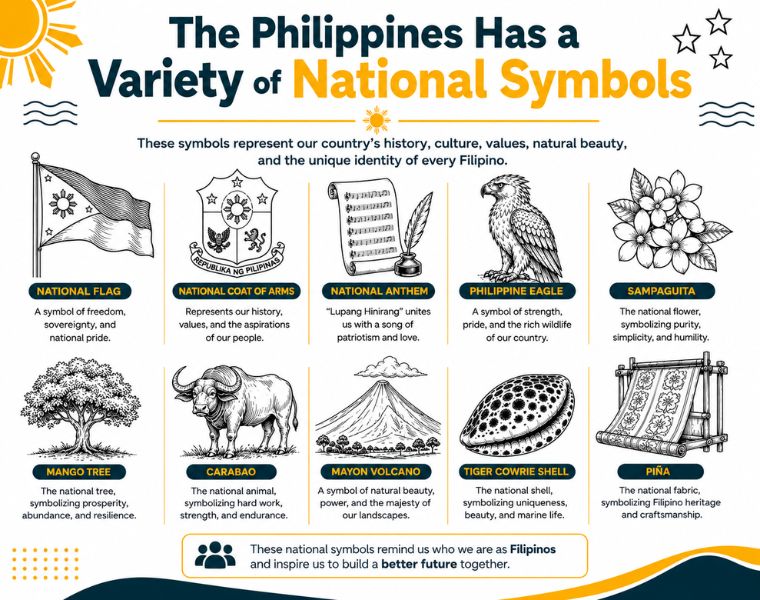
The national symbols of the Philippines are symbols of the country’s freedom, history, culture, and unity. These symbols are a reminder of the nation’s past, the sacrifices of its heroes and the beauty of its natural treasures.
They can be seen in schools, government buildings, public events, textbooks, museums, coins, stamps, and national celebrations.
Each symbol carries a special meaning, promoting patriotic feelings, respect, courage, hope and love for the nation.
These symbols help children and adults understand Filipino identity and appreciate the values that unite the country. 🏛️
Philippine Flag
The Philippine flag is the most important symbol of the country.
The blue stripe symbolizes peace, truth, and justice, while the red stripe represents courage, bravery and patriotism. The white triangle represents equality, freedom and unity.
The eight rays of the sun symbolize the first eight provinces that declared independence from Spain, while the three stars represent Luzon, Visayas and Mindanao.
The flag is proudly displayed during Independence Day, school functions, sports events and national celebrations as a symbol of freedom and national pride.
Philippine Eagle
The Philippine Eagle is the country’s national bird and one of the rarest eagles in the world. It symbolizes strength, courage, freedom, resilience and environmental protection.
This majestic bird is found only in the forests of the Philippines and reminds people of the importance of protecting wildlife and conserving the country’s rich biodiversity.
The Philippine Eagle has become a powerful symbol of environmental awareness and patriotism. 🦅
Narra Tree
The Narra is the national tree of the Philippines. It symbolizes strength, endurance, stability and lasting beauty. Narra is recognized for its excellent hardwood and golden blooms.
It reminds Filipinos that people can endure through all seasons of life when they have strong roots, hard work and resilience. Today, the Narra remains a symbol of the enduring spirit of the Filipino people. 🌳
Preserving Cultural Heritage through Filipino Symbols
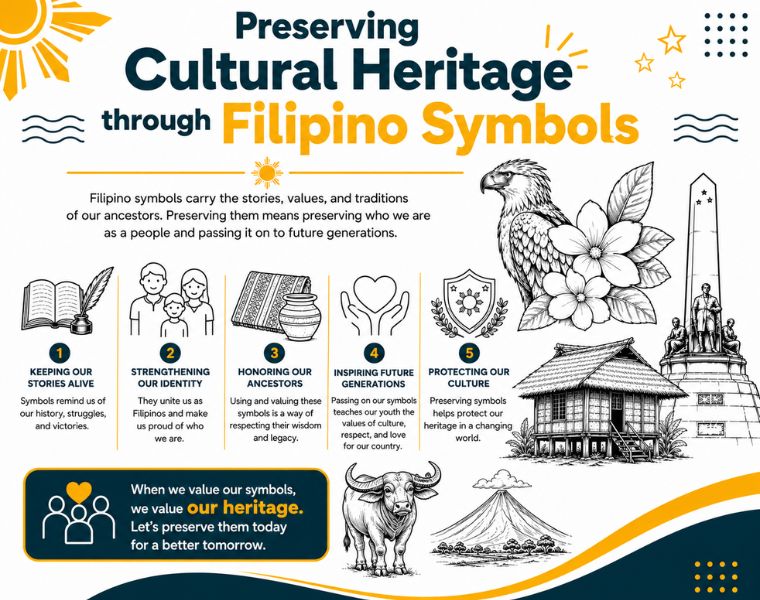
Filipino symbols are very significant in maintaining the cultural heritage generation after generation.
The symbols serve as a visual representation of the country’s history, values, and identity. Each symbol has a story that bridges the past and the present; traditional clothing, architecture, writing systems and community practices all come into play.
They are a way for young people to learn about their origins and the importance of their customs.
These are cultural icons that are handed down through the narratives, familial teachings, and classroom instruction and community events.
They help maintain the knowledge of traditional beliefs, history, and values such as respect, unity, and resilience.Many important cultural meanings may be lost over time if these symbols are not present.
For this reason, they are protected and promoted in museums, schools and cultural programs. 📚
How Filipino Symbols Are Used Today
Filipino symbols are not only historical relics; they are also used every day. They are seen in fashion, art, media, branding and public events. For instance, traditional patterns are used in modern clothing, whereas cultural symbols are featured in logos, mementoes, and electronic artwork. This helps to maintain tradition in an ever-evolving society. 🎨
The other symbols are also popular in campaigns of national identity and tourism. While out in the Philippines, people are likely to see jeepneys, barongs, sampaguita flowers, and Filipino dances being touted as symbols of Filipino culture. The symbols play an important role in establishing a strong national image which is known locally and globally. 🌏
Young Filipinos in the digital world still use and re-imagine traditional symbols in innovative ways. By creating digital artwork, memes, short videos and educational posts, cultural identity continues to live in a new era. 📱
Respect the symbols and traditions of the Filipinos
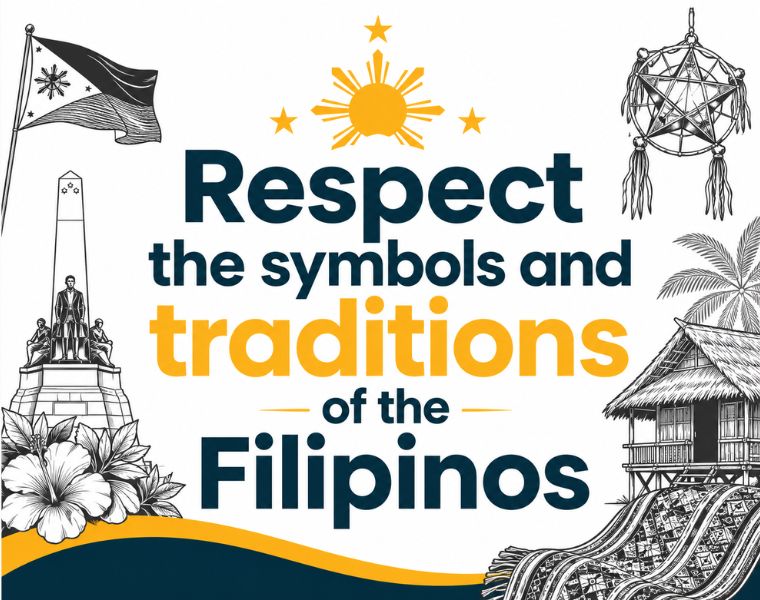
To respect Filipino symbols, one must be familiar with their significance and apply them correctly. These symbols go beyond mere ornaments; they are significant cultural representations, history, and identity. They are maintained for future generations by people that care for them.
Respect can be demonstrated in a number of ways, including knowing the significance of each symbol prior to their use. For instance, traditional attire such as Barong Tagalog and Baro’t Saya should be worn appropriately and at suitable occasions, like cultural events, weddings, or formal ceremonies. If not used appropriately, all these symbols can diminish in culture.
Additionally, it is crucial to promote local artisans, weavers, and cultural groups that contribute to the maintenance of traditional crafts. Authentic handmade products and cultural events help to sustain the traditions. Respect also implies not using sacred symbols in an inappropriate manner or misrepresenting culture.
Symbols from the Philippines become more modern
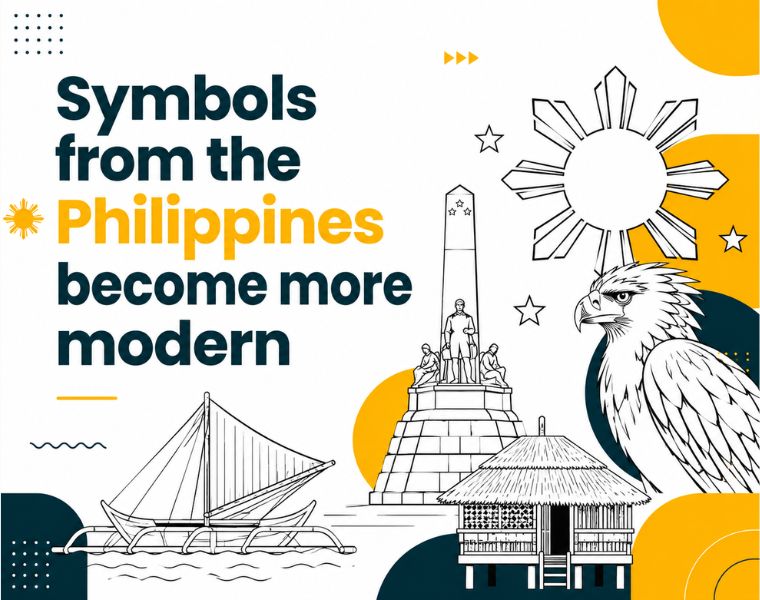
As society changes, Filipino symbols are evolving. Although their original significance is still relevant, there are new adaptations in modern art, fashion and technology. Artists frequently blend the old with the new to produce something new and yet still keep the old in mind. 🎭
Today, for instance, Baybayin is used in common fonts, in tattoos and in graphic design. Modern transportation art and urban culture projects have been inspired by Jeepneys. Even the traditional textiles are being redesigned in modern outfits for the fashion market around the globe. This is evidence of the fact that culture is living and continually evolving. 🧵
This development enables young people to engage in their heritage in a way that is meaningful to them in the context of their lives. Rather than supplanting tradition, modern adaptations reinforce an appreciation of the culture, rendering it more accessible and more interesting.
Filipino Symbols in Education
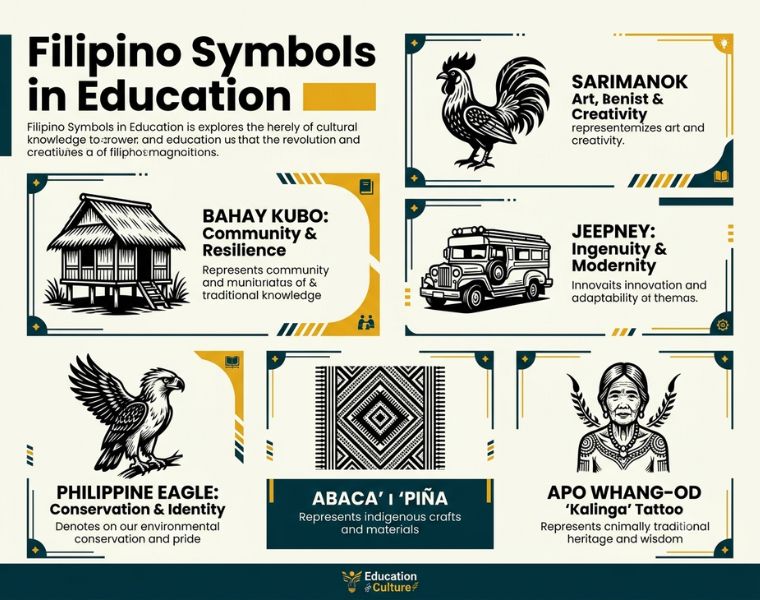
Education is an important means in maintaining Filipino cultural symbols. Students learn about the national symbols, traditional actions, historical figures, and indigenous culture in school. This helps to develop a sense of identity and pride at the early ages. 🏫
The study of Filipino symbols is sometimes incorporated into other subjects such as history, social studies, and the arts. Students are not only taught the meaning of these symbols but also the significance of them. Cultural presentations, drawing traditional symbols and wearing national clothing on special days reinforces this learning.
Another way to enjoy traditional music, dance, food and crafts is through cultural programs and heritage months at educational institutions. The activities are more interactive and meaningful to learning. 🎶
Symbols used for festivals and celebrations among the Filipinos
Among the most colorful expressions of cultural symbols in the Philippines are festivals. Typical clothes, music, dances and decorations are often featured at events such as town fiestas, religious festivals and national holidays. These are great events for communities to celebrate together and be together. 🎉
On these occasions, the symbols like the Sampaguita, Barong Tagalog and traditional folk dances are proudly showcased. Colorful designs adorn jeeps, and street banners and cultural motifs line the streets. These celebrations highlight the creativity and unity of Filipino communities. 🚌
Festivals also act as a means of transferring traditions to the younger generations. Children are engaged in dances, performances and cultural displays, thereby keeping traditions alive and much appreciated. That’s why festivals are vital to the preservation of culture. 🎭
Everyday Life and Cultural Identity
Filipino symbols are not restricted to special events, but are also seen in everyday life. Cultural identity is omnipresent, to be seen in the clothes people wear, in the way people travel, in the ways they cook, etc. Simple values such as family values, hospitality and community spirit are symbolic traditions.
Neighborly help during emergencies, for instance, is an example of the Bayanihan spirit. The traditional values today also have an impact on behavior, thus demonstrating that culture is embedded in the life of today.
The Filipinos have a great bond with their heritage as they are able to identify these symbols in every day of their life while progressing in the modern world. 🌏
Cultural Symbols of the Philippines
Culture is abundant with symbols that embody the values of family, spirituality, hospitality, creativity and community life in Filipino culture.
These cultural symbols have been passed on through various generations, and to this day they form the identity of the Filipinos, not only in the Philippines, but also overseas.
They can be found in traditions, celebrations, crafts, music, dance, literature, and everyday life. 🎭
Bahay Kubo
One of the Philippines’ most recognized cultural symbols is the Bahay Kubo or nipa hut.
Constructed using bamboo, nipa leaves and other natural materials, it symbolizes simplicity, strength and resilience, adaptability, and harmony with nature.
It is also a symbol of Filipino cooperation through the tradition of “bayanihan” referring to communities moving houses to assist each other. 🏠
Jeepney
The Jeepney is regarded as the king of Philippine roads, a monument to the ingenuity and resourcefulness of the Filipinos.
Jeepneys were derived from vehicles that were left behind after World War II and were eventually transformed into public transport vehicles, with colorful decorations and messages.
They embody creativity, community, and the longing for a better future among the Filipinos. 🚐
Barong Tagalog
Barong Tagalog is the national costume of the men and it represents elegance, dignity and pride of the Philippine people.
It has traditionally been created from light materials like piña and jusi and is usually worn at weddings, formal events, festivals and significant celebrations.
Today, the Barong is still a symbol of Filipino identity and heritage, both domestically and internationally. 👔
Filipiniana Dress
Filipiniana dress is a traditional dress of the Filipinos characterized by its beautiful sleeves and the butterfly. It symbolizes the feminine, the sophisticated, the national and pride in Filipino craftsmanship.
The Filipiniana is still being used today in cultural events, pageants, formal occasions and national celebrations. 👗
Bayanihan
Bayanihan is a Filipino tradition that showcases unity, cooperation, and community spirit.
It began with neighbors carrying the house of a family together during a move, but is developed to mean gestures of kindness, volunteerism, and individuals coming together to support others.
The spirit of bayanihan has continued to be a testament to the Filipino sense of care and cooperation. 🤝
Sampaguita
The Sampaguita, the national flower of the Philippines, symbolizes purity, humility, simplicity, and devotion.
It is small white blossom with a sweet fragrance, making it a popular symbol in the Filipino culture.
Sampaguita garlands are made to use when honoring and respecting others during ceremonies, religious activities and welcoming events. 🌸
Religious symbols of the Philippines
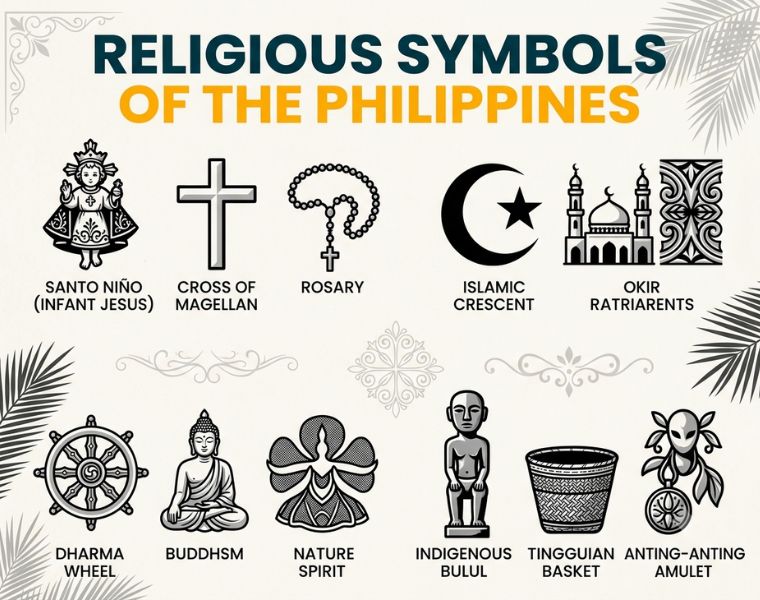
For centuries, religion has been an integral part in the development of Filipino culture, tradition, and values. Religious symbols are imbued in everyday life and express belief and devotion, hope and spiritual identity.
They are seen in churches, in houses, in festivals, in processions, in works of art and in holy places all over the country.
Santo Niño
One of the most popular religious symbols in the Philippines is the Santo Niño or the Holy Child Jesus. It symbolizes faith, protection, blessings, innocence and divine guidance.
The Santo Niño is venerated by millions of Filipinos through prayers, festivals and religious rituals, most notably during the Sinulog Festival in the city of Cebu. 👶
Black Nazarene
The Black Nazarene is a sacred likeness of Jesus Christ carrying the cross, and represents sacrifice, endurance, humility, and unwavering faith.
There are also annual processions and prayers for devout followers to seek healing, guidance and spiritual strength. The image is one of the most enduring symbols of the Filipino’s religious sentiments. ✝️
Rosary
The Rosary is a symbol of Catholic faith in the Philippines, prayer, meditation, devotion and spiritual connection.
In the Philippines, many families have a rosary in their home, carry it for protection and pray with it in their personal and communal prayers.
Simbang Gabi
Simbang Gabi is an important Filipino Christmas tradition of nine Masses that happen at the dawn of the nine days before Christmas Day. It represents hope, persistence, thanks and unity.
It is a religious tradition that unites families and communities to celebrate their faith and look forward to the birth of Jesus Christ.
Church Bells
Church bells have been used as an important religious symbol for the Filipino community for a long time. They proclaim worship services, mark significant events and gather people for joy or sorrow.
Their music is a symbol for unity, belief, heritage, and spiritual connection.
Cross
One of the most well-known religious symbols in the Philippines is the Christian Cross. It means faith, salvation, sacrifice, forgiveness and hope.
The cross is frequently used in homes, schools, churches, cemeteries and public areas as symbols of spiritual values and devotion.
Tribal Symbols of the Philippines
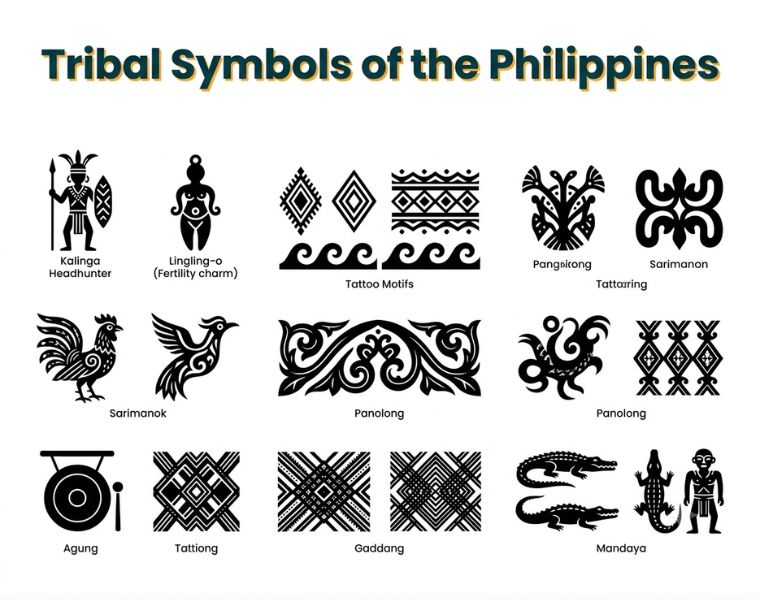
The Philippines’ indigenous people have a rich artistic heritage that helps them to maintain their cultural identity, their ancestral knowledge and their spiritual beliefs.
Tribal symbols represent relationships to nature, social position, safeguarding, courage, and tribal traditions.
The game is still incredibly popular and continues to influence contemporary art, fashion, and cultural heritage initiatives. 🏹
Kalinga Tattoos
Traditional Kalinga tattoos are one of the most popular and acclaimed local symbols in the Philippines. They are a symbol of courage, achievement, identity, beauty, and social status.
In the past, certain tattoo designs were awarded to warriors for their courageous deeds and women adorned themselves with tattoos to showcase their beauty and cultural identity. 🖋️
Lingling-o
Lingling-o is an ancient pendant which is usually worn by people from different indigenous groups in Northern Luzon. It represents fertility, prosperity, continuity and protection.
The Lingling-o is made of jade, shell, gold or stone, and is an important symbol of pre-colonial Filipino heritage.
Bulul
Bulul is a carved figure of wood made by the Ifugao, and is related to the cultivation of Rice, abundant harvests, prosperity and blessing from ancestors.
The traditional custom is to set up such sacred figures in the vicinity of rice granaries to protect the crops and make them fruitful. 🌾
Weaving Patterns
The traditional weaving designs of the various types of the Filipino ethnic group represent family lineage, class, identity, creativity and cultural continuity.
The designs are often complex and have different meanings in different communities, with some including nature, geometry, and religious symbolism.
Modern Filipino Symbols
The Filipino people in the present-day society are generating and utilizing new symbols of innovation, resilience, global influence and national pride.
The use of these symbols are seen as a reflection of the changing identity of the Filipino people while at the same time using contemporary symbols to complement the traditional symbols of heritage.
Overseas Filipino Workers (OFWs)
For OFWs, they are became symbols of sacrifice, dedication, perseverance and commitment to family. They contribute to millions of household and contribute to the country’s economic development.
OFWs are frequently acknowledged as the modern-day hero who works hard and is resilient. 💪
Filipino Hospitality 🤝
The hospitality of the Filipinos is known around the world and represents warmness, generosity, kindness and good family values.
Filipinos are also known for their welcome and hospitality, and ensuring that visitors feel at home. 🏡
Festivals 🎉
Philippine festivals are a celebration of the country’s rich tradition, creativity, spirituality and cultural diversity.
The Sinulog, Ati-Atihan, Pahiyas and Kadayawan festivals represent happiness, gratitude, togetherness, and pride in the community.
They still draw in visitors and help to maintain local traditions and heritage.
Rose is the natural symbol of the Philippines 🌹
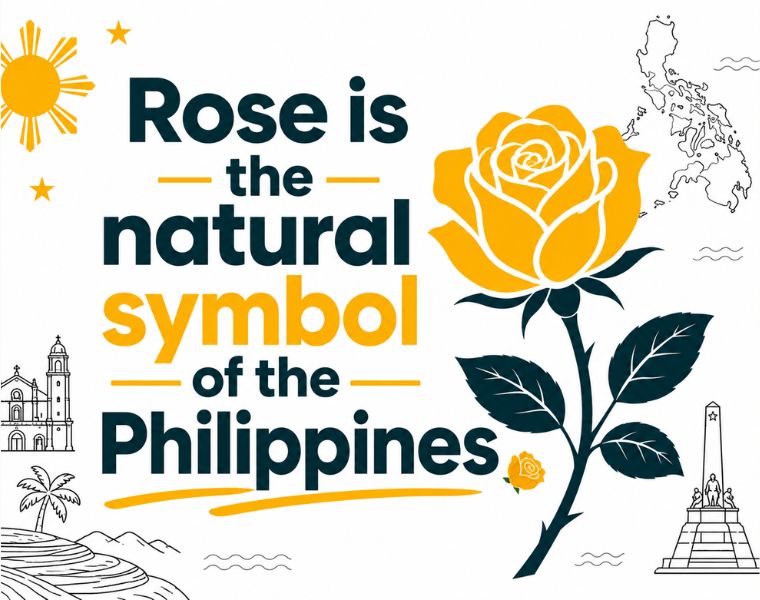
The Philippines boasts extraordinary natural wonders that have come to be significant symbols of national pride, consciousness and identity.
The natural symbols are a reminder to the Filipinos of the country’s diverse biodiversity and its need to be conserved for future generations. 🌿
Carabao 🐃
The Carabao is known as the national animal of the Philippines and is a representation of the Filipino’s virtues of hard work, perseverance, patience and determination.
It has helped farmers in agriculture and is a symbol of the Filipino spirit of perseverance and dedication for centuries. 🚜
Mango 🥭
One of the sweetest mangoes in the world, the Philippine mango is a symbol of abundance, prosperity, nourishment and agricultural success.
A significant contributor to Filipino cuisine and a source of pride to the local farmers and communities. 🌞
Coconut Tree 🌴
The coconut tree, dubbed the “Tree of Life,” represents resourcefulness, sustainability, resilience and economic significance.
It is one of the most useful natural resources in the Philippines, with almost every part of the tree being utilised in the Philippines. 🥥
Tamaraw 🐾
Tamaraw is a rare and endangered species that is only found in the island of Mindoro. It symbolises uniqueness, strength, endurance and the conservation of wildlife.
The Tamaraw is symbolic of the country’s natural heritage, and protecting it is important to uphold the country’s commitment to that heritage. 🌿
Mayon Volcano 🌋
Mayon Volcano is renowned for its almost perfect cone shape and is a symbol of beauty, power, resilience and the dynamic forces of nature.
One of the most known landmarks in the Philippines and is visited by people from all over the world. 🔥
Historical Symbols of the Philippines 📜
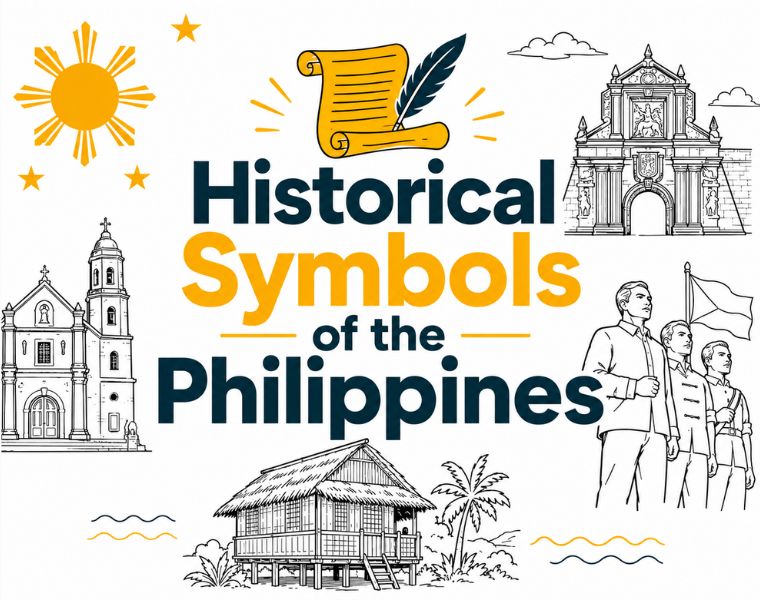
Historical Symbols help to remember the important events, heroic sacrifice and milestones that formed the nation. They are still a source of patriotism and enriches knowledge of Philippine history. 🏛️
Rizal Monument 🏛️
The Rizal Monument is in honour of the country’s national hero, Dr. José Rizal, and represents patriotism, intellectual valor, liberty and national consciousness.
It is a reminder of his efforts in the cause of Philippine independence and reform movements.
Katipunan Emblem ⚔️
The Katipunan emblem symbolizes courage, fighting, patriotism and indomitable spirit against the Spaniards. It was a symbol of unity for those who revolted against colonial rule and is still a reminder of a courageous Filipino. 🔥
Cry of Pugad Lawin 📢
Pugad Lawin is the beginning of the Philippine Revolution against the Spaniards. It symbolizes freedom, sacrifice, determination and the desire of the people for self-governance. 🕊️
Bataan Memorial Cross 🕊️
The Bataan Memorial Cross is a tribute to the heroism and sacrifices during World War II. It represents strength, remembrance, patriotism and honor for those that served the country. 🎖️
Festivals (Cultural Symbols) 🎭
The Philippines has its very own symbols for the festival. The Philippines even has symbols for the festival. 🌺
The festivals highlight the rich traditions, colourful heritage and the spirit of the community of the country. These celebrations are unique and have symbols that evoke local history, religion and cultural pride. 🎊
Sinulog Festival 💃
The Sinulog Festival is a festival which is one of the most celebrated in the Philippines and is dedicated to the Santo Niño. It represents faith, devotion, gratitude, cultural unity through music, dance and colourful processions. 🙏
Ati-Atihan Festival 🎭
Ati-Atihan is considered the “Mother of All Philippine Festivals” and is a celebration of indigenous heritage, religious devotion and community spirit.
Participants get dressed in colorful costumes and paint their faces in order to celebrate the traditions and early inhabitants. 🎨
Pahiyas Festival 🌾
Pahiyas Festival is an exhibition of creativity, bountifulness and gratitude. It displays a variety of colorful items related to agriculture, symbolizing a prosperous harvest and cultural heritage. 🌽
Kadayawan Festival 🌸
Kadayawan is a festival of thanksgiving that is celebrated in Davao City. It represents wealth, diversity, thanks and unity among the various ethnic groups. 🤝
Filipino Values Symbols ❤️
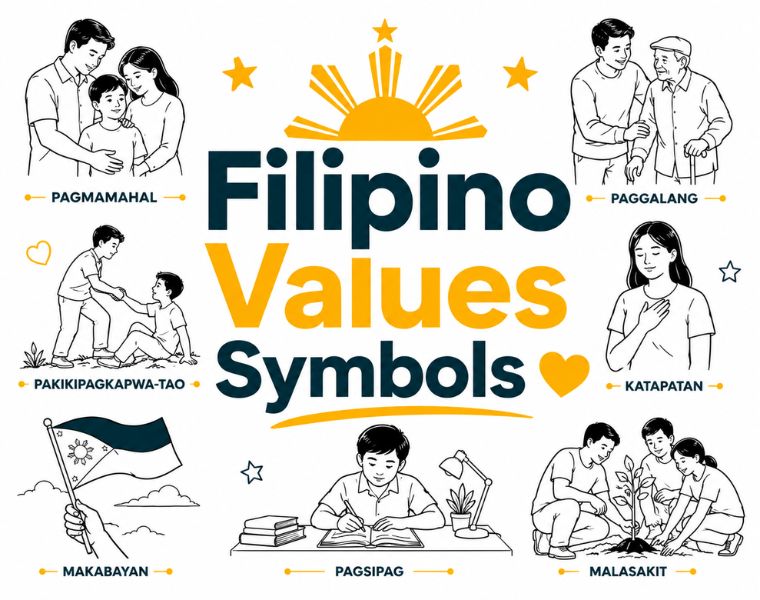
Filipino symbols also represent values, which is an integral part of the character and identity of the nation. These ideals continue to have an impact on society and on future generations. 🌱
Family 👨👩👧👦
Family is one of the most valuable symbols among the Filipinos and signifies love, support, loyalty, sacrifice and unity. The strong family bonds are an integral part of the Filipino culture and social norm. 💞
Respect for Elders 🙏
The image of respect for elders represents gratitude, humility, wisdom and good morals. Pagmamano remains an element of the traditions that serve to honor parents, grandparents and community leaders. 👵
Hospitality 😊
Hospitality is one of the highest valued personality traits among Filipinos and it represents kindness, generosity, warmth, and inclusiveness. The Filipino’s tradition of being hospitable remains an integral part of identity. 🏡
Resilience 💪
Resilience represents a person’s ability to overcome challenges, bounce back from difficulties and remain optimistic in the face of adversity. This has become one of the most defining characteristics of Filipinos. 🌈
Final Thoughts
Symbols are not only artistic designs or objects, or traditions, in the Philippines. They represent the history, values, accomplishments and goals of the country. 📜
These symbols have come from the earliest tribal symbols, indigenous customs, national symbols to contemporary icons that represent the Filipino people and connect generations through shared values and memories. 🌍
FAQs
What are Filipino symbols?
Filipino symbols are pictures, objects, animals, and traditions that show the history and culture of the Philippines.
Why are Filipino symbols important?
Filipino symbols help people remember their history, traditions, and values. They also teach children about their culture. ✨
What is the most famous Filipino symbol?
The Philippine Flag is one of the most famous Filipino symbols. It stands for freedom, unity, and pride in the country. 🚩
What does the Sarimanok symbolize?
The Sarimanok is a mythical bird that stands for good luck, wealth, power, and success. 🐦
What is Baybayin?
Baybayin is an old writing system used in the Philippines before Spanish rule. It represents knowledge, learning, and Filipino heritage. ✍️
What is the meaning of Okir patterns?
Okir patterns are traditional Maranao designs that symbolize beauty, creativity, strength, and cultural pride. 🌺