The meanings of Celtic Symbols have always captivated the interest of many, providing insight into the spiritual and cultural heritage of the ancient Celtic people. These complex forms and holy symbols were much more than pieces of artwork.
They embodied strong beliefs about life, nature, love and protection, wisdom and the interplay of the physical and the spiritual. These symbols were derived from the Celtic cultures that thrived in Ireland, Scotland, Wales and parts of Europe, where they were integral to daily life, religious rituals, and the oral history of the people.
The Celts believed the world was an interrelated web, each element of nature had a meaning. This is why many of the Celtic symbols are endless loops, knots, circles and spirals, which symbolize eternity, balance, and the cycle of life. The designs evolved over time and were adopted by the Celtic people as a way of expressing their identity and beliefs, becoming an integral part of their art, jewelry, architecture, and modern spirituality.
Today, Celtic symbols continue to captivate people around the world. They are cherished for their beauty and the messages they have to convey, whether they are worn as meaningful jewelry, used in tattoos, or displayed as decorative artwork. People are attracted to Celtic symbols as a reminder of personal strength, enduring love, spiritual development and protection from negativity.
This guide will introduce you to some of the most popular Celtic symbols, such as the Celtic Knot, the Trinity Knot, the Celtic Cross, the Tree of Life and many more ancient symbols. Through the study of their meanings and significance, you will better understand how these amazing signs have withstood the test of time and continue to motivate people today.
History of Celtic Symbols and Their Origins
Celtic symbols have a long history, originating over 2,000 years ago with the Celtic people who inhabited areas of the world in modern-day Ireland, Scotland, Wales, England, parts of France and Central Europe. The Celts were a group of nomadic tribes with very special art, warrior traditions and religious beliefs.
They did not leave many written records, but their symbols have been preserved by archaeological finds, ancient monuments, manuscripts and oral traditions. A love for nature was at the core of Celtic culture. The Celts saw spiritual significance in natural things like animals, animals, trees, rivers, mountains and the seasons. Their designs were strongly influenced by the natural world, with which they were in close contact.
Spirals, circles and interwoven patterns usually represented the round trip of life, death, rebirth, and the connection of all living things. Numerous symbols were indicative of the idea that the physical and spiritual world were strongly connected and interacting at all times.
The Druids, seen as Celtic priests, scholars, judges and advisors, were instrumental in maintaining spiritual knowledge. Instead of using written texts, Druids transmitted their knowledge orally, through stories, poetry, and rituals. Many Celtic symbols, therefore, had multiple associations, which were hidden and discovered through the practice of the Celtic religion and the teachings of their culture. These symbols were now used to convey spiritual ideas, tribal identity and wisdom of the ancestors.
Christianity was introduced in the Celtic areas during the 5th century, resulting in a lot of changes, but also the retention of many of the symbols. Christian missionaries did not supplant pre-existing beliefs, but rather used Celtic imagery to accompany their messages.
The fusion of traditions resulted in the creation of iconic symbols, like the Celtic Cross, which combined the Christian cross with the Celtic circle, symbolizing eternity and divine unity. A large number of the older motifs were used to convey Christian themes, but some of the motifs were still recognizable as having older meanings.
Celtic symbols have undergone a splendid resurgence in modern times. The revival of Celtic interest, spirituality and art has revived people’s appreciation of these ancient designs. Celtic symbols can be found in jewelry, tattoos, literature, architecture and cultural celebrations all over the world today.
These themes of strength, love, protection, wisdom and the eternal bond between people and nature make them so popular.
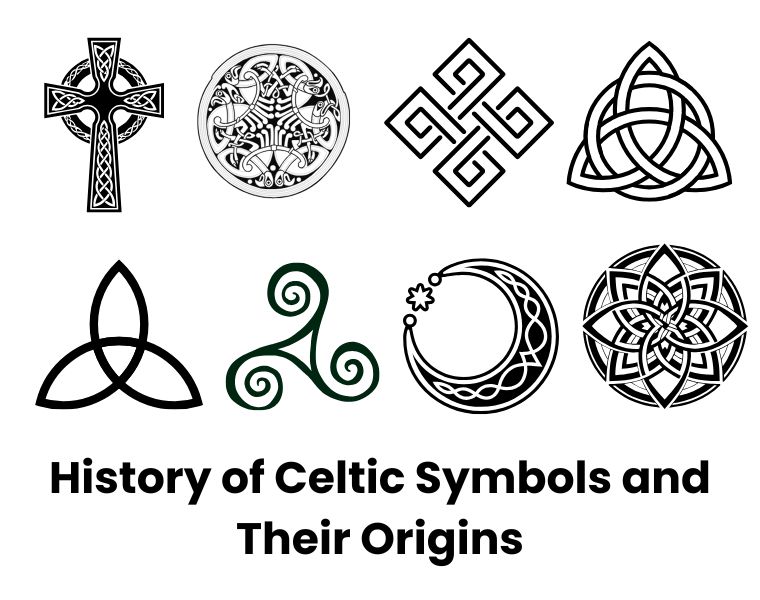
1. Triskelion
- Meaning: The Triskelion represents movement, progress and the strength of three.
- Historical Background: It is one of the oldest symbols of the Celtic race, had been around before the Christian faith and was used in ancient stone carvings throughout Ireland and Europe.
- Spiritual Meaning: The three spirals symbolize ideas of life, death, and rebirth; mind, body, and spirit; or land, sea, and sky.
- Modern Interpretation: It is seen as a symbol of personal development, resilience, and ongoing transformation.
2. Triquetra
- Meaning: Triquetra means eternity, unity and interconnectedness.
- Historical Background: Used in ancient Celtic art and in Christian symbolism.
- Spiritual meaning: The three loops represent the endless life and the intertwined relationship of three forces (in this case, mind, body and spirit).
- Modern Interpretation: It represents harmony, unity and the lasting bonds.
- Jewelry & Tattoo Use: Eternally loving and used as a symbol of love, unity in the families and spiritual relationship, popular in jewelry, necklaces, tattoos and more.
3. Tree of Life
- Meaning: Balance, growth and the interrelationship of all life is the meaning of the Celtic Tree of Life.
- Historical Background: Trees were venerated and sacred in Celtic culture and were thought to link heaven, earth and underworld.
- Spiritual Meaning: The branches and roots symbolize the unity and interdependence of all things, and the passage of time.
- Contemporary: It relates to individual growth and knowledge, as well as to the environment.
- Jewelry & Tattoo Use: Frequently used in jewelry, representing strength, family heritage, and growth throughout one’s life.
4. Dara Knot
- Meanings: It symbolizes strength, resilience and inner power.
- Historical background: It is named after the Irish word “doire” meaning oak tree, one of the most sacred trees of the Celts.
- Spiritual Meaning: The complex knot is a symbol of the rich and abundant oak tree roots.
- Modern Interpretation: It is a reminder of perseverance in the face of difficulties.
- Jewelry & Tattoo Use: Commonly used as jewelry and tattoos, it is a symbol of courage, determination, and never giving up.
5. Celtic Cross
- Meaning: The Celtic Cross is a symbol of faith, eternity and divine protection.
- Historical Background: It arose during the Celtic cultural integration of Christian beliefs in early medieval Ireland.
- Spiritual meaning: The circle around the cross symbolizes eternity, unity and God’s unending presence.
- Modern Interpretation: It is seen as a religious and cultural symbol that represents spiritual guidance and heritage.Jewelry & Tattoo Use: For the jewelry and tattoo market, it is utilized in necklaces, memorial jewelry and tattoos to represent faith, remembrance and Celtic connection
6. Awen
- Meaning: Awen represents inspiration, creativity and enlightenment from the divine.
- Historical Background: It has been adopted from Celtic and Druidic traditions and is sometimes represented by three rays of light.
- Spiritual Meaning: The symbol is a representation of the inspiration that comes from higher spiritual sources and the balance of opposing forces.
- Modern Interpretation: In modern times, it is used as a symbol for creativity, wisdom, and spiritual energy among artists, writers, and those who seek spiritual wisdom.
- Use for Jewelry & Tattoo: Often worn as a reminder to pursue knowledge, creativity, and personal enlightenment.
7. Claddagh
- Meaning: The meaning of the Claddagh is love, loyalty and friendship.
- Historical Background: In the fishing village of Claddagh in Ireland it evolved into one of the most recognized symbols of Ireland.
- The meaning of the symbols: The heart is the symbol of loving, the hands are the symbol of friendship, and the crown is the symbol of loyalty.
- Modern Meanings: It continues to be an effective symbol of significant relationships and dedication.
- Jewelry & Tattoo Use: Most common with rings given between partners, friends, and family members to symbolize long-lasting love.
8. Shield Knot
- Meaning: The Shield Knot symbolizes protection and protection from harm.
- Historical Background: Ancient Celtic warriors used to use knot designs on their shields and armor.
- Spiritual Significance: The interlaced pattern was thought to help fend off evil spirits and bad energies.
- Modern Interpretation: Personal safety, strength, and protection for the soul.
- Jewelry & Tattoo Use: Often used in tattoos and as protective amulets, symbolizing strength, security, and bravery in challenging times.
9. Ailm
- Meaning: The meaning of the symbol Ailm is strength, healing and spiritual purity.
- Historical Background: It was related to the fir tree in Celtic culture and strength and endurance.
- Spiritual meaning: The symbol has a spiritual meaning of inner healing, clarity and the ability to overcome adversity.
- Modern Interpretation: Many consider it a symbol of personal rejuvenation and emotional healing.
- Jewelry & Tattoo Use: Worn by people who want to remember that they’re resilient, growing and developing in their life experience, and learning to be stronger spiritually.
10. Serch Bythol
- Meaning: The Serch Bythol represents a commitment of love and devotion that is never-ending.
- Historical Background: This Celtic design from Wales is based on the overlapping of two Trinity Knots in order to form a design of endless love.
- Spiritual Significance: The unbroken lines are a symbol of a connection that cuts across time and place.
- Modern Interpretation: It is often associated with soulmates, lifelong partnerships, and deep emotional connections.
- Jewelry & Tattoo Use: These are often put into wedding presents, wedding jewelry and romantic tattoos to signify lasting love.
11. St. Brigid’s Cross
- Meaning: St Brigid’s Cross is a symbol of protection, blessing and prosperity.
- Historical Background: Rushes were traditionally used to make it, and it is a symbol of St. Brigid, one of the patron saints of Ireland.
- Spiritual Meaning: The cross was thought to keep the home and family safe from bad luck and harm.
- Modern interpretation: It continues to be a symbol of faith, comfort and household protection.
- Jewelry & Tattoo Use: Worn as a religious symbol or as body art of Irish identity.
12. Sailor’s Knot
- Meaning: Sailing the Knot is to represent a love which lasts forever, a friendship and safe passage.
- Historical Background: It is associated with sea life, but was integrated into Celtic decorative art.
- Spiritual meaning: The loops interlaced symbolise the connection between people who are geographically or otherwise disconnected.
- Modern Interpretation: It is generally interpreted as a sign of trustworthiness and everlasting bond.
- Jewelry & Tattoo Use: Being popular among couples, friends and travelers, it is a great idea of a lasting relationship.
13. Spiral of Life
- Meaning: Spiral of Life means Growth, Evolution and the continuous cycle of life.
- Historical background: Spiral designs are widely used in the prehistoric and ancient Celtic context.
- Spiritual Meaning: The growing spiral represents life’s journey, growth and spiritual awakening.
- Modern Interpretation: It’s accepted as a reminder that life is changing and developing.Jewelry & Tattoo Use: Often selected for jewelry or tattoos to represent self discovery, progress and lifelong learning.
14. Motherhood Knot
- Meaning: The Motherhood Knot is a symbol of the eternal bond between a mother and child.
- Design History: This design is inspired by the traditional Celtic knotwork but is a more modern interpretation based on Celtic art forms.
- Spiritual meaning: The loops are interconnected which symbolizes unconditional love, nurturing and family unity.
- Modern interpretation: It is a recognition of the significance of motherhood and family relations.
- Jewelry & Tattoo Use: often worn by mothers and given on birth, parenthood and for life-long family ties.
15. Celtic Shield Cross
- Meaning: The Celtic Shield Cross represents protection, faith and spiritual strength.
- Historical background: It combines traditions of the Celtic Cross and ancient shields.
- Spiritual Meaning: The symbol is said to provide protection against bad influences and strengthen people’s spiritual beliefs.
- Modern Meaning: Courage, persistence and overcoming difficulties.
- Jewelry & Tattoo Use: Oftentimes used in pendants, rings and tattoos for spiritual guidance and for symbolic protection.
Celtic Animal Symbols and Their Meanings
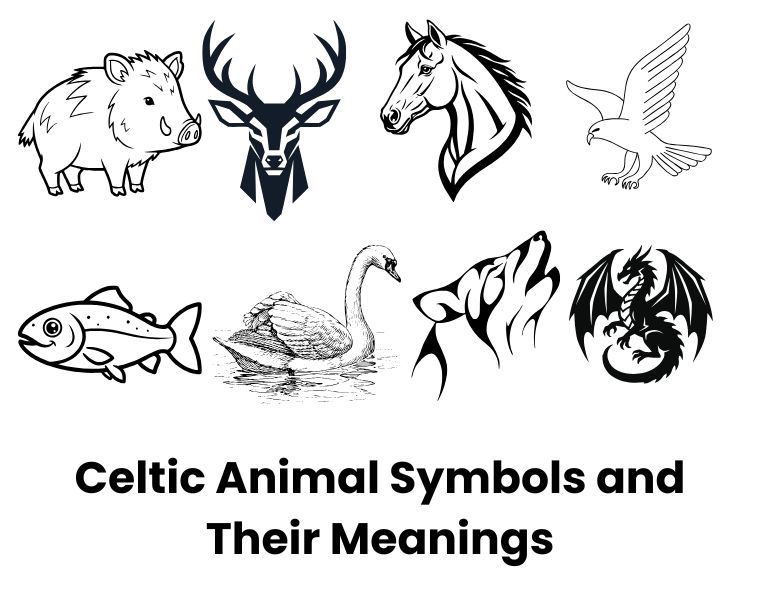
Celtic people venerated and revered animals. The ancient Celtic people believed that animals had their own special spiritual energies and were frequently seen as messengers between the physical world and the spiritual world.
Many of the symbols of the animals in Celtic culture had symbols of life lessons, virtues, and natural forces that helped to guide people through their life. They remain a symbol today and continue to inspire people through art, folklore, jewelry and spiritual practices.
Boar
- Meaning: Bravery, power, courage.
- Spiritual Symbolism: The boar was a symbol of fearlessness in battle and indomitable resilience, often worshiped by Celtic warriors. This was a sign of the ability to tackle difficulties squarely.
- Modern Significance: In the modern world, the boar is a sign of personal courage, tenacity and strength in the face of difficulty.
Stag
- Meaning: The meaning of the tree is nobility, leadership and renewal.
- Spiritual Symbolism: The annual shedding and regrowth of antlers by the stag was a symbol of regeneration and spiritual transformation. It was often associated with wisdom and guidance.
- Modern Significance: Personal growth, dignity and acceptance of positive change is represented by the stag in modern times.
Horse
- Meaning: The qualities of being free, strong or resilient.
- Spiritual Symbolism: The horse was also a symbol of Celtic goddess Epona, representing vitality, prosperity and protection on journeys.
- Modern Significance: It remains a symbol of independence, ambition and the desire to stand up for one’s cause.
Raven
- Meaning: o prophesy, to acquire intelligence, to change.
- Spiritual Symbolism: Ravens were associated with the spiritual world and were thought to bring messages from the gods; they were also seen as symbols of wisdom, foresight, and mystery.
- Spiritual Meaning: The raven is a symbol of intuition, strategic thinking, and living the life changes.
Salmon
- Meaning: Knowledge, wise knowledge, enlightenment.
- Spiritual Symbolism: The Celtic Salmon of Knowledge was a very wise fish that acquired knowledge from experience and study.
- Modern Significance: The salmon symbolism of education, self-development and a quest for truth continues today.
Swan
- Meaning: The meaning is LOVE, PURITY and BEAUTY.
- Spiritual Symbolism: Swans symbolized grace, spiritual awakening and a link between earth and heaven. They frequently showed up in Celtic tales of change and sacrifice.
- Modern Significance: The swan symbolizes elegance, inner peace, and enduring love.
Wolf
- Meaning: The meaning of the word is loyalty, instinct, guardianship.
- Spiritual Symbolism: Wolves were respected for their prowess as hunters and protectors of their packs. They symbolized good family relationships, intuition and survival.
- Modern Significance: In the present time, the wolf is a sign of leadership, loyalty, independence, and trust in one’s instincts.
Dragon
- Meaning: The meaning of the name is Power, protection and sovereignty.
- Spiritual Symbolism: Celtic dragons were thought to represent guardians of sacred sites, secrets, and natural elements. They were strong and had great spiritual power.
- Modern Significance: The dragon continues to be a strong symbol of protection, bravery, wisdom and personal power.
These Celtic animal symbols all indicate the reverence that the Celts had for nature and its creatures. These meanings remain relevant today, and provide age-old insights into strength, wisdom, transformation, loyalty, and between people and nature.
Celtic Symbols by Category
Symbols for Strength
In Celtic tradition strength was considered not just physical, but mental and spiritual as well. It encompassed strength of character, perseverance, courage, and determination. There are many Celtic symbols that represent these and still evoke them today.
- One of the most popular symbols of strength in the Celtic culture is the Dara Knot. It is inspired by the great oak tree, symbolizing inner strength, stability and endurance in times of hardship.
- The Ailm is a reminder of strength and resilience, encouraging people to persevere through challenges and come out stronger.
- Celtic warriors were greatly respected for the Boar’s courage and fearlessness. This was turned into an icon of courage, strength and steadfastness.
- Similarly, the Triskelion embodies strength as it moves and advances. The three spirals represent adaptability, evolution, and progress, even in the face of challenges.
All of these are symbols of courage, resilience, and the strength needed to overcome life’s challenges.
Symbols for Protection
Protection was a major part of Celtic spirituality and there are numerous symbols that were thought to ward off bad spirits or harm to people, their families, or their communities.
- The Shield Knot is surely one of the plainest and simply emblems of protection. It was also commonly worn on weapons, armor, shields to protect the ancient Celts in battle. It was thought that because it was interconnected, it repelled evil and protected the wearer from evil.
- The Celtic Cross is a blend of Christian and Celtic elements, representing divine protection, faith, and spiritual guidance. The circle around the cross symbolizes eternity and the everlasting nature of divine power. It is still one of the most popular symbols of spiritual safety.
- St Brigid’s Cross is another significant protective symbol and is traditionally woven from rushes and hung in Irish homes. It was thought to protect the house from ill fortunes, sickness and harm, and to bring benefits and good fortune to the home.
Today, these symbols remind us of safety, faith, and spiritual protection.
Symbols for Wisdom
In Celtic culture, wisdom was highly esteemed, and sometimes considered to be a form of knowledge, intuition, spiritual insight, and a deep connection to the natural world.
- The Salmon is one of the most significant Celtic symbols of wisdom. In mythology, the Salmon of Knowledge acquired deep knowledge and insight, and represented a symbol of learning and enlightenment throughout one’s life.
- The Raven embodies intelligence, foresight and spiritual awareness. Celts thought ravens knew more than just the physical realm and could reveal secrets to them. They were further linked to prophecy and transformation and thus their symbolic association with wisdom was enhanced.
- Three rays of light are the symbol for inspiration and divine enlightenment, the Awen. It reflects the creative, insightful and spiritual revelation from the higher sources.
- Additionally, the Tree of Life represents wisdom because it represents growth and experience and the interrelatedness of all things. It has roots and branches; a reminder that knowledge is a product of life’s experiences and the interactions we have with our environment.
Combined, they help to stimulate learning, reflection and spiritual awareness.
Symbols for Love
Love is one of the most important symbols in Celtic Symbolism. There are lots of Celtic designs that honor the connections and relationships between individuals and the emotions that tie them together, including loyalty, devotion, and emotional bond.
- Perhaps the most renowned Celtic symbol of love is the Claddagh. It has a heart, hands and crown symbolizing love, friendship and loyalty. It’s still a favored emblem of loving relationships and significant personal links.
- The three interwoven loops make the Triquetra symbol of eternal unity. It’s forever designed, symbolizing the everlasting love and the unbreakable connection between two people. It’s frequently related to harmony and dedication.
- The Welsh Celtic Symbol Search Bythol has a particular meaning of eternal love and devotion. It is created by two intertwined Trinity Knots and represents a connection that is beyond time and place.
All of these symbols are a testament to love, affection, trust, loyalty, and the strength of love. These have timeless meanings and therefore are popular for jewelry, marriage presents and tattoos of intense emotional associations.
Symbols for Family
Family relationships were central to Celtic society, where kinship, ancestry, and community formed the foundation of daily life. Several Celtic symbols beautifully reflect these enduring bonds.
- The Motherhood Knot symbolizes the sacred relationship between parent and child. Its interconnected loops represent unconditional love, protection, nurturing, and the lifelong connection shared within families. It has become a popular symbol for celebrating motherhood and family unity.
- The Tree of Life also carries strong family symbolism. Its roots represent ancestors and heritage, while its branches symbolize future generations. The tree reflects the idea that all family members are connected through a shared history and common roots.
- The Claddagh, although widely associated with romantic love, also symbolizes friendship and loyalty within families. Its message of trust, commitment, and enduring affection extends beyond romantic relationships to include familial bonds.
These symbols remind us of the importance of family, heritage, and the relationships that provide support, guidance, and belonging throughout life.
Symbols for Rebirth
Rebirth and renewal were important themes in Celtic spirituality, reflecting the natural cycles of life, death, and transformation observed throughout nature.
- The Spiral of Life is one of the most powerful symbols of continuous growth and renewal. Its expanding form represents personal evolution, spiritual awakening, and the ongoing journey of self-discovery. It reminds us that change is a natural and necessary part of life.
- The Triskelion also symbolizes rebirth through its dynamic movement and cyclical structure. The three spirals reflect constant progression and transformation, emphasizing that endings often lead to new beginnings.
- The Swan carries strong associations with transformation and spiritual renewal. In Celtic mythology, swans frequently appeared in stories involving magical change, enlightenment, and personal growth. Their graceful nature further connected them with purity and new beginnings.
Together, these symbols represent resilience, transformation, and the opportunity for renewal that exists throughout every stage of life’s journey. They encourage embracing change as a pathway to growth, wisdom, and spiritual development.
How to Choose a Celtic Symbol
It is your personal choice and you should select your Celtic symbol in accordance with your values, beliefs and aspirations. Each symbol has different meanings that also have been handed down from many centuries in the past, so choosing the symbol that matches your life journey can be even better.
A great first step is to think about your own objectives. Symbols like the Dara Knot or the Ailm may be suitable for those who are looking for resilience and determination. People wanting to grow and change may be tempted to choose the Triskelion or Spiral of Life, whereas those looking for long-term relationships may opt for the Claddagh or Serch Bythol.
Your spiritual beliefs may also have an impact on your selection. Symbols such as the Awen, the Tree of Life, and the Celtic Cross have deep spiritual connections to wisdom, enlightenment, and the connection to the divine.
Choosing a symbol with a meaning that resonates with your beliefs can help you feel more connected and significant.
For a lot of people, cultural heritage is one additional crucial element. People who are of Irish, Scottish, Welsh, or other Celtic background may select symbols to represent and honor their heritage. These symbols can be worn and/or displayed as a meaningful link to ancestral traditions and history.
It’s also important to take into account if you’re planning to wear the symbol on your body as a tattoo or jewelry. Many tattoos are permanent and can be symbolic of personal beliefs or experiences. Jewelry can be worn for various purposes or occasions, providing more flexibility. The purpose of the Celtic symbol isn’t limited to meanings, it can be your pride and national symbol, an inspiration or simply a beautiful design.
Celtic Symbols in Tattoos and Jewelry
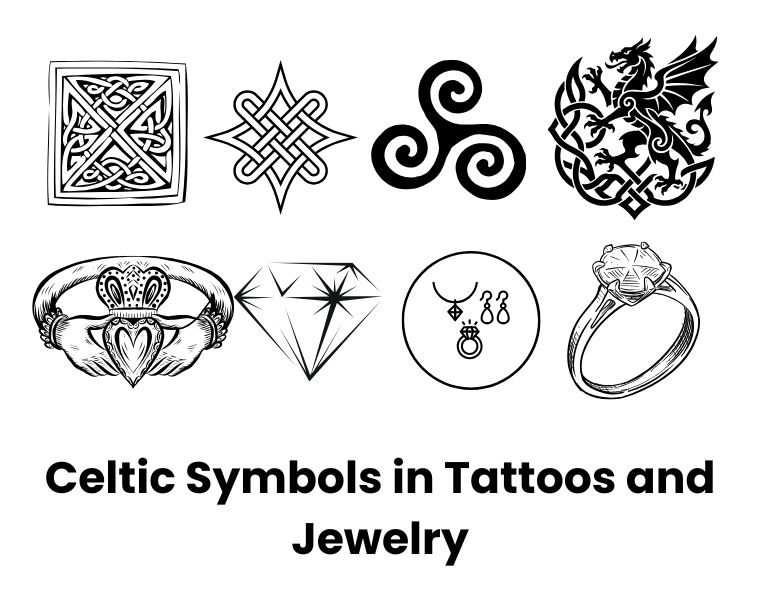
The Celtic symbols are becoming more popular as tattoos and jewelry these days, and this is due to their timeless beauty, intricate designs, and the meaning behind them. These ancient symbols continue to be relevant in contemporary society, whether for their cultural significance, the representation of values, or the commemoration of significant life events.
Popular tattoo designs include Celtic Crosses, Dara Knots, Triquetra, Triskelion and Tree of Life tattoos. Celtic knotwork tattoos are popular because of the continuous lines, which represent eternity, interconnectedness, and the continuous journey of life.
Other symbols that are frequently used include animal figures, such as the wolf, raven, and stag, which can symbolize characteristics like loyalty, wisdom, courage, and transformation. Celtic designs are frequently intricate and woven together to form a striking and significant design on the body.
Symbols like the Claddagh, Tree of Life, Triquetra and Celtic Cross are particularly popular in jewelry. These are just some of the symbols that continue to be used today, with the claddagh ring representing love, friendship, and loyalty, and the Tree of Life pendant representing growth, family, and balance.
Celtic Knot bracelets, charms, and earrings, along with necklaces, are popular pieces of jewellery to wear as a symbol of strength, protection, and spirituality.
Many people when picking a Celtic tattoo or jewelry do it based on the meaning. The Shield Knot or St. Brigid’s Cross is the most popular symbol for those looking for protection, while the Awen or Salmon symbol is popular for people who are interested in wisdom.
Symbols that relate to love, family, strength, or personal transformation can have an extra special meaning, and can be a design that can last for years and be meaningful for years.
Conclusion
Celtic symbols have been around for a long time as they are not just art but also serve as a representation of something. These symbols were deeply rooted and connected to the beliefs, practices and everyday existence of the ancient Celtic people and were used to convey messages of strength, wisdom, protection, love, family and spiritual connection. The Celts used the intricate knots, spirals, crosses and animal emblems to communicate deep concepts of nature, relationships and the eternal rhythms of life.
Celtic symbolism holds significant meaning to people today. Symbols such as the Tree of Life, Triskelion, Awen, and Celtic Cross remind us of personal growth, balance, faith, and the interconnectedness of all things. Others, like the Claddagh, Motherhood Knot and Serch Bythol, are symbols of strong relationships of love, loyalty, and family. These are timeless messages that are universal and not bound to generation or culture.
The symbols of the Celts are still relevant today, and can be seen in many forms, including tattoos, jewelry, paintings, decorative objects, and spiritual rituals. They remain popular for both their inspirational and protective value and as a symbol of one’s identity.
These are some of the oldest emblems that can be used for various purposes, including celebrating Celtic traditions, representing spiritual beliefs, or depicting the passage of life. Their timeless appeal is a testament to their universal symbolism, and they will continue to inspire and resonate with people for generations to come.
Frequently Asked Questions (FAQs)
What is the most powerful Celtic symbol?
The Tree of Life is the symbol that many regard as the most potent of all the Celtic symbols, for its meaning is balance, wisdom, growth and the interrelationship of all life forms. But the meaning of the “most powerful” symbol usually has to do with the meaning that is most relevant to the individual.
What does Trinity Knot symbolize?
The Trinity Knot (Triquetra) is a symbol of eternity, unity and connection. It is often said to be associated with the three-fold nature of life mind, body and spirit – and is also connected with eternal love and spiritual harmony.
Which Celtic symbol means protection?
The Celtic symbol of protection is the Shield Knot. It was worn by Celtic warriors to repel evil, negative energies and physical attacks, and to give strength and security.
What is the Celtic symbol for strength?
The Dara Knot is the most popular Celtic symbol of strength. Its symbolism is inspired by the sacred oak tree, which is a symbol of resilience, endurance, stability, and inner power in the face of challenges in life.