Vow symbols have been used for thousands of years to represent love, loyalty, faith and promises. They make feelings tangible that may not be able to be communicated easily in words.
A ring, a knot, a candle, a tattoo, or a pendant or sacred object can remind people of an important promise. The symbols can be used in weddings, religious ceremonies, friendship, family traditions, and personal rituals.
They can have different definitions in different cultures, but love, trust, devotion, honor and commitment are common themes.
What Are Vow Symbols?
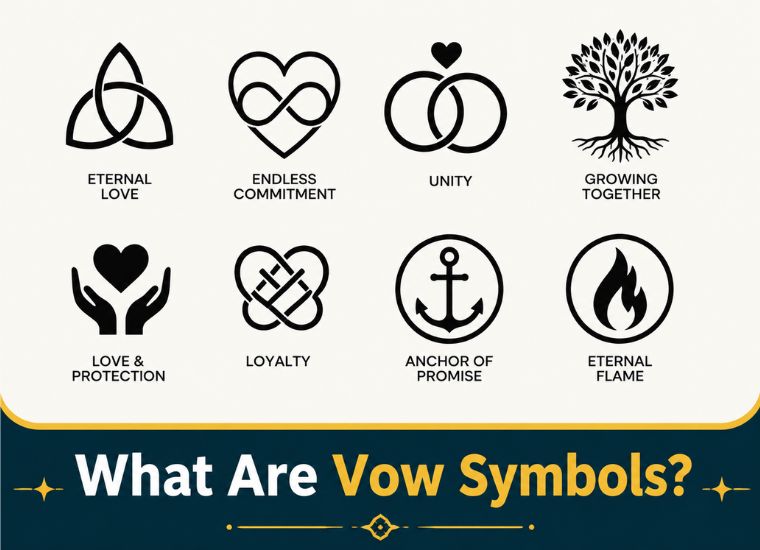
A vow symbol is a thing, a sign, a gesture, or a sacred mark used to make a vow, take an oath, or make a firm commitment. Often they are significant because of their history and feeling.
- A ring can represent eternal love.
- A knot can represent two lives joined together.
- A candle can represent hope and spiritual promise.
- A tattoo can preserve a special memory.
- A pendant can keep someone close to the heart.
- A sacred object can represent faith and devotion.
Long before written contracts became common, people used physical tokens to remember loyalty, duty, and relationships.
Ancient tribes used cords, warriors carried tokens from loved ones, and religious followers wore objects connected with faith and devotion.
Why Do Vow Symbols Matter?
A vow symbol can carry several meanings at once:
- Love and affection
- Loyalty and trust
- Faith and devotion
- Honor and sacrifice
- Spiritual connection
- Emotional security
- Family identity
- Lifelong commitment
The object may be simple, but the promise behind it can make it deeply meaningful.
90+ Meaningful Vow Symbols and Their Meanings
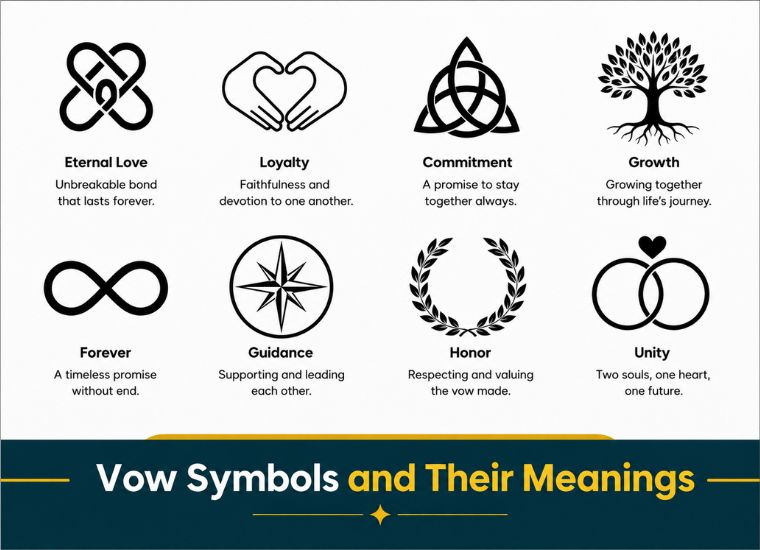
Below are meaningful vow symbols connected with love, commitment, faith, unity, protection, and personal promises.
1. Wedding Ring
The wedding ring is one of the most recognized vow symbols.
- Shape: Unbroken circle
- Meaning: Eternal love and lifelong union
- Represents: Loyalty, faithfulness, and commitment
- Used in: Weddings, anniversaries, and marriage traditions
The circle has no clear beginning or end, making it a natural image of eternity.
2. Promise Ring
A promise ring can represent a serious romantic or personal commitment.
- Love
- Loyalty
- Future intention
- Emotional devotion
- Commitment before marriage
Its meaning depends on the promise shared by the people wearing it.
3. Celtic Love Knot
Celtic love knots use interwoven lines with no obvious beginning or end.
- Eternal connection
- Spiritual unity
- Destiny
- Inseparable love
- Lifelong bonding
They are often seen in jewelry, tattoos, manuscripts, and spiritual art.
4. Sacred Candle
A sacred candle can represent a promise that continues to shine.
- Purity
- Hope
- Spiritual devotion
- Divine witnessing
- Lasting commitment
Candles appear in weddings, religious ceremonies, prayer rituals, and memorial events.
5. Handfasting Cord
Handfasting cords or ribbons are tied around joined hands.
- Meaning: Two lives joined through vows
- Symbolizes: Unity and sacred commitment
- Associated with: Celtic and pagan ceremonies
- Popular phrase: “Tying the knot”
The tradition gives a physical form to the idea of joining two lives.
6. Loyalty Tattoo
A loyalty tattoo can turn a promise into permanent body art.
- Names
- Dates
- Matching designs
- Special symbols
- Personal messages
Such tattoos may represent love, family, friendship, military bonds, or spiritual devotion.
7. Claddagh Ring
The Claddagh combines three familiar images:
- Heart: Love
- Hands: Friendship and support
- Crown: Loyalty
It is often chosen as a meaningful relationship symbol.
8. Infinity Symbol
The infinity sign has no visible ending.
- Eternal love
- Endless friendship
- Lasting connection
- Continuous commitment
It is especially common in modern jewelry and tattoos.
9. Heart
The heart remains a simple symbol of emotional truth.
- Love
- Affection
- Devotion
- Vulnerability
- Care
10. Sacred Fire
Sacred fire has strong ceremonial meaning.
- Purification
- Transformation
- Passion
- Spiritual connection
- Divine witnessing
In Hindu wedding traditions, sacred fire acts as a divine witness to marriage promises.
11. Interlocking Rings
Two connected rings can represent:
- Partnership
- Unity
- Shared life
- Mutual trust
- Lasting commitment
12. Knotted Cord
A knotted cord represents a promise meant to hold.
- Connection
- Strength
- Unity
- Loyalty
- Commitment
13. Chain
A chain can have both positive and negative meanings.
- Positive: Strength and loyalty
- Negative: Restriction and emotional pressure
This shows how personal experience can change symbolic meaning.
14. Ke
A key can represent trust and emotional openness.
- Access to someone’s heart
- Trust
- Privacy
- Emotional closeness
- Shared secrets
15. Lock
A lock can symbolize:
- Protection
- Privacy
- Security
- Loyalty
- A guarded promise
16. Locket
A locket can hold a photo or small personal item.
- Memory
- Love
- Family
- Emotional connection
- Remembrance
17. Pendant
A meaningful pendant may carry:
- Initials
- Dates
- Names
- Religious symbols
- Personal designs
18. Family Crest
A family crest can represent:
- Heritage
- Family identity
- Honor
- Belonging
- Shared history
19. Prayer Beads
Prayer beads are connected with spiritual practice.
- Devotion
- Faith
- Discipline
- Mindful living
- Sacred teachings
They can become daily reminders of spiritual promises.
20. Cross
The cross is an important Christian symbol.
- Faith
- Sacrifice
- Devotion
- Divine blessing
- Spiritual unity
Christian weddings may use crosses alongside rings, candles, and veils.
21. Wedding Veil
A wedding veil can represent:
- Marriage
- Ceremony
- Tradition
- Sacred union
- Personal meaning
22. Sacred Necklace
A sacred necklace may represent:
- Faith
- Marriage
- Family
- Protection
- Spiritual commitment
23. Red Thread
A red thread can symbolize:
- Connection
- Protection
- Destiny
- Emotional bonds
- Meaningful relationships
24. Paper Crane
Paper cranes can carry meanings of:
- Hope
- Peace
- Care
- Good wishes
- Meaningful relationships
Japanese traditions also use family crests and ceremonial objects to express honor, respect, and commitment.
25. Ceremonial Cup
A ceremonial cup can represent:
- Shared life
- Unity
- Celebration
- Partnership
- A witnessed promise
26. Sacred Stone
A stone can represent:
- Strength
- Stability
- Endurance
- Protection
- A lasting bond
27. Moon Symbol
The moon can represent:
- Life cycles
- Change
- Emotional connection
- Growth
- Enduring bonds
28. Star
A star may symbolize:
- Hope
- Guidance
- Destiny
- Light
- Inspiration
29. Sun
The sun can represent:
- Warmth
- Life
- Hope
- Strength
- Positive energy
30. Tree
A tree is a strong image of:
- Roots
- Family
- Growth
- Stability
- Long-term relationships
31. Tree of Life
The Tree of Life can connect:
- Family roots
- Personal growth
- Strength
- Spiritual connection
- Future generations
Vow Symbols Across Cultures
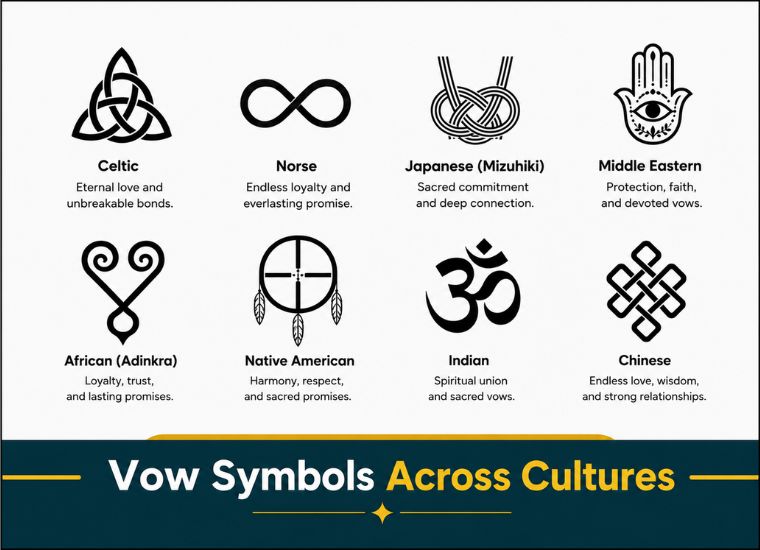
Vow symbols show how different societies express commitment.
Ancient Egyptian Culture
Ancient Egyptian traditions connected rings with eternity and divine cycles.
- Rings represented lasting connection.
- Amulets carried sacred meanings.
- Carvings could represent promises to gods and family.
- Marriage could connect spiritual journeys with the afterlife.
Celtic Traditions
Celtic traditions placed strong value on:
- Loyalty
- Spiritual unity
- Endless connection
- Destiny
- Loved ones
Knots became especially meaningful because their woven lines suggest an unbroken bond.
Japanese Culture
Japanese symbolic traditions connect vows with:
- Honor
- Discipline
- Loyalty
- Respect
- Sacred commitment
Examples include folded paper cranes, family crests, and ceremonial sake cups.
Hindu Traditions
Hindu weddings contain several meaningful vow symbols.
- Sacred fire
- Necklaces
- Red powder
- Ritual circles
- Ceremonial movements
The sacred fire acts as a divine witness to marriage promises.
Medieval European Culture
Medieval Europe used vow symbols in:
- Royal courts
- Religious orders
- Knightly traditions
- Marriage customs
Knights could use swords, crosses, rings, robes, and tokens to express loyalty and religious vows.
Vow Symbols in Religion
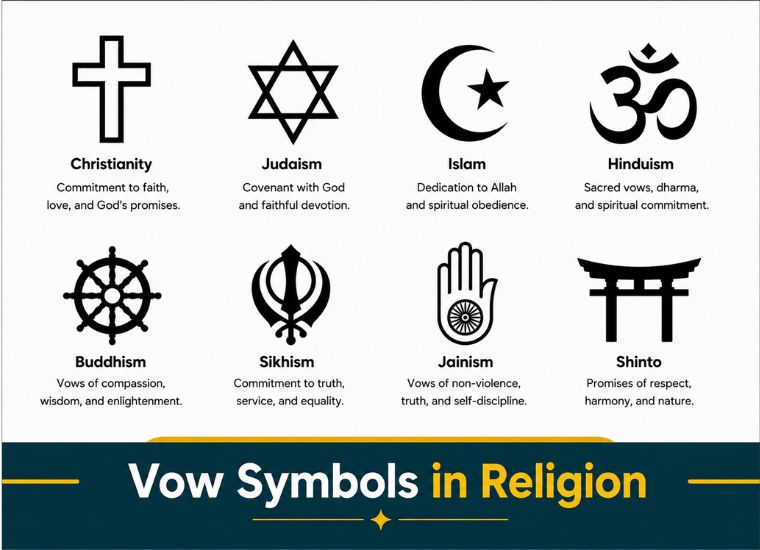
Religion gives many vow symbols a sacred role.
- Christianity: Rings, candles, veils, and crosses can represent spiritual unity and divine blessing.
- Buddhism: Prayer beads and robes can represent discipline, compassion, and spiritual vows.
- Islam: Spoken promises, contracts, jewelry, and gifts can carry meanings of trust and honor.
- Pagan traditions: Cords, stones, moon symbols, and fire can represent sacred promises and connection with nature.
The important point is that meaning depends on the faith, ceremony, culture, and personal intention.
Vow Symbols in Art, Movies, and Pop Culture
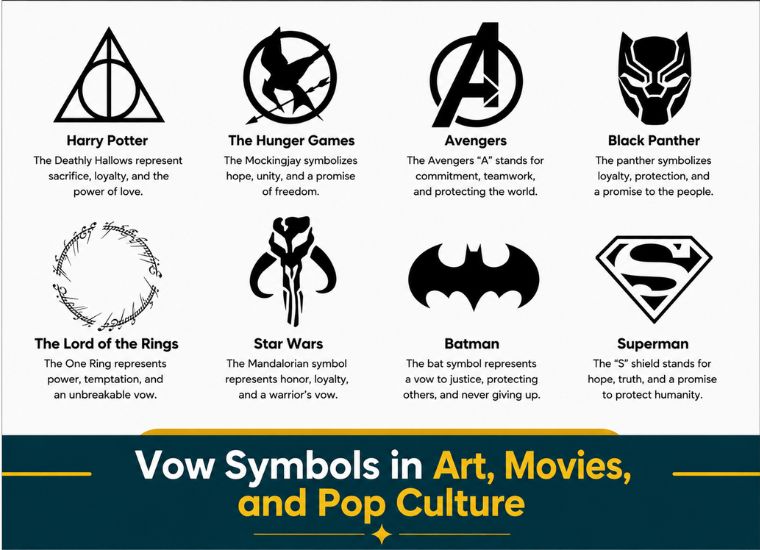
Modern stories often use symbols to create emotional meaning.
- Rings can represent love and sacrifice.
- Lockets can preserve memories.
- Letters can carry promises.
- Chains can show strong or difficult bonds.
- Magical objects can represent ancient oaths.
- Tattoos can show permanent commitment.
- Infinity signs and hearts often appear in modern fashion.
A small object can become important to a story because it carries a character’s memories and emotions.
Spiritual and Dream Meaning of Vow Symbols
Vow symbols can also appear in dreams.
- Ring: Commitment, trust, or an unresolved promise
- Broken ring: Fear of separation or betrayal
- Knot: Connection or emotional entanglement
- Untied knot: Healing or freedom
- Fire: Passion, transformation, or spiritual guidance
- Lost symbol: Insecurity, guilt, or fear of losing a relationship
Dream meanings are personal. A symbol may mean something different based on memories, emotions, and current life events.
Positive and Negative Meanings of Vow Symbols
Vow symbols can carry positive feelings:
- Love
- Loyalty
- Trust
- Courage
- Protection
- Honor
- Spiritual connection
- Emotional security
But they may also remind people of difficult experiences:
- Broken trust
- Guilt
- Emotional pressure
- Possession
- Fear of change
- Painful memories
- Toxic attachment
A ring can bring happiness to one person and painful memories to another. Meaning comes from personal experience as well as cultural tradition.
Why Humans Are Attracted to Vow Symbols
People often want physical reminders of important emotions. Life changes, relationships grow, and memories fade, but a symbol can help preserve a meaningful moment.
- Emotional security
- A sense of identity
- A reminder of responsibility
- Connection with family
- Spiritual comfort
- A feeling of belonging
- Emotional stability during stress
A simple ring can become valuable because of the memory attached to it rather than its material price.
Hidden Meanings Behind Common Vow Symbols
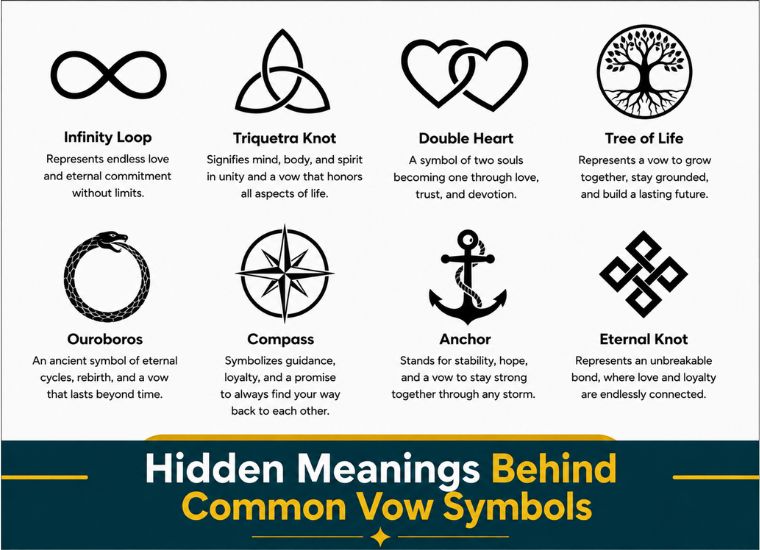
Some common shapes have powerful symbolic ideas:
- Circles: Eternity, unity, protection, endless cycles
- Knots: Connection, destiny, inseparable bonds
- Fire: Purification, transformation, divine witnessing
- Chains: Loyalty and strength, but sometimes restriction
- Hearts: Affection, truth, vulnerability, devotion
- Keys: Trust, openness, and emotional access
Modern Evolution of Vow Symbols
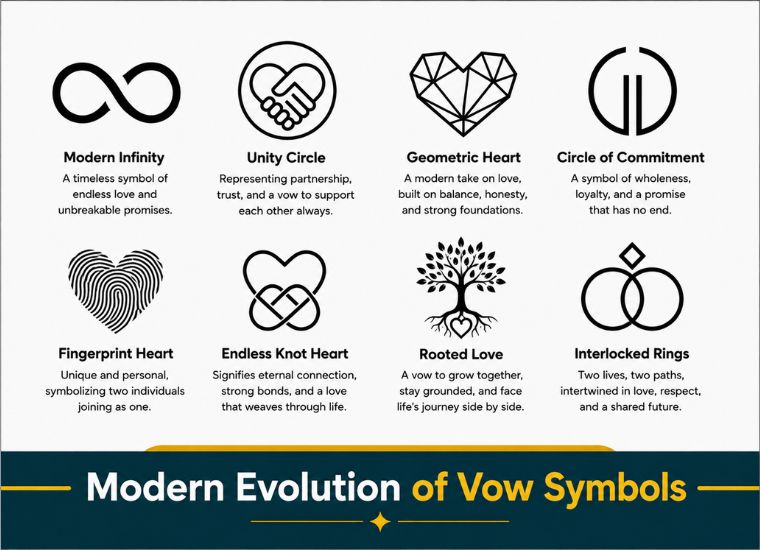
Vow symbols continue to change with modern life. Couples may now use:
- Customized jewelry
- Matching tattoos
- Digital promise art
- Private symbols
- Social media gestures
- Personalized gifts
- Shared designs
The form may be modern, but the emotional need is very old. People still want visible reminders of invisible feelings such as love, loyalty, trust, and commitment.
Conclusion
Vow symbols manifest promises that are frequently in the heart. Stories of love, trust, faith, loyalty, and devotion can be conveyed in wedding rings, Celtic knots, sacred fire, tattoos, lockets, family tokens, and more.
These symbols have been used in various cultures to help people remember important relationships and spiritual promises. Although they can change in shape, their function remains easily understood: to grab hold of something important.
Today, in the year 2026, people still do this traditional thing with jewelry and tattoos as well as with art, ceremonies and digital symbols. Most powerful vow symbol is the one that has a real promise.
FAQs
What do vow symbols represent?
Vow symbols can be used to denote promises, fidelity, commitment, trust, spiritual connection and emotional bond. They are subject to individual and cultural interpretation.
What is the most common vow symbol?
One of the most iconic symbols of vows is the wedding ring. It is round, and often associated with an unending love and partnership.
Are vow symbols spiritual?
Yes, they can be spiritual, many. Objects can be rings, candles, prayer beads, sacred fire, crosses, etc., that can link personal commitments to faith and sacred practices.
Why do people wear vow symbols?
They are donned to commemorate love, loyalty, faith, identity, family, friendship or an important life commitment.
Can vow symbols appear in dreams?
Yes. Relationships, trust, emotions and spiritual growth are associated with rings, knots, flames and other symbols in dreams.
Do vow symbols have negative meanings?
Yes. They may symbolise betrayal, guilt, emotional stress, past trauma, or a negative relationship.